How to Buy European – Part 1: Start Where You Are
It doesn’t matter whether you’re shopping for a toothbrush, a winter jacket, a washing machine, or a backpack. The principles for buying European are the same. Here’s where to begin.
Buying European isn’t a lifestyle reserved for experts or activists. It’s a practical skill — and like any skill, it starts small. At InEurope.eu, we focus on outdoor gear and casual clothing, so our examples lean that way. But the approach below works for almost anything you want to buy new.
Step 1: Go Local First
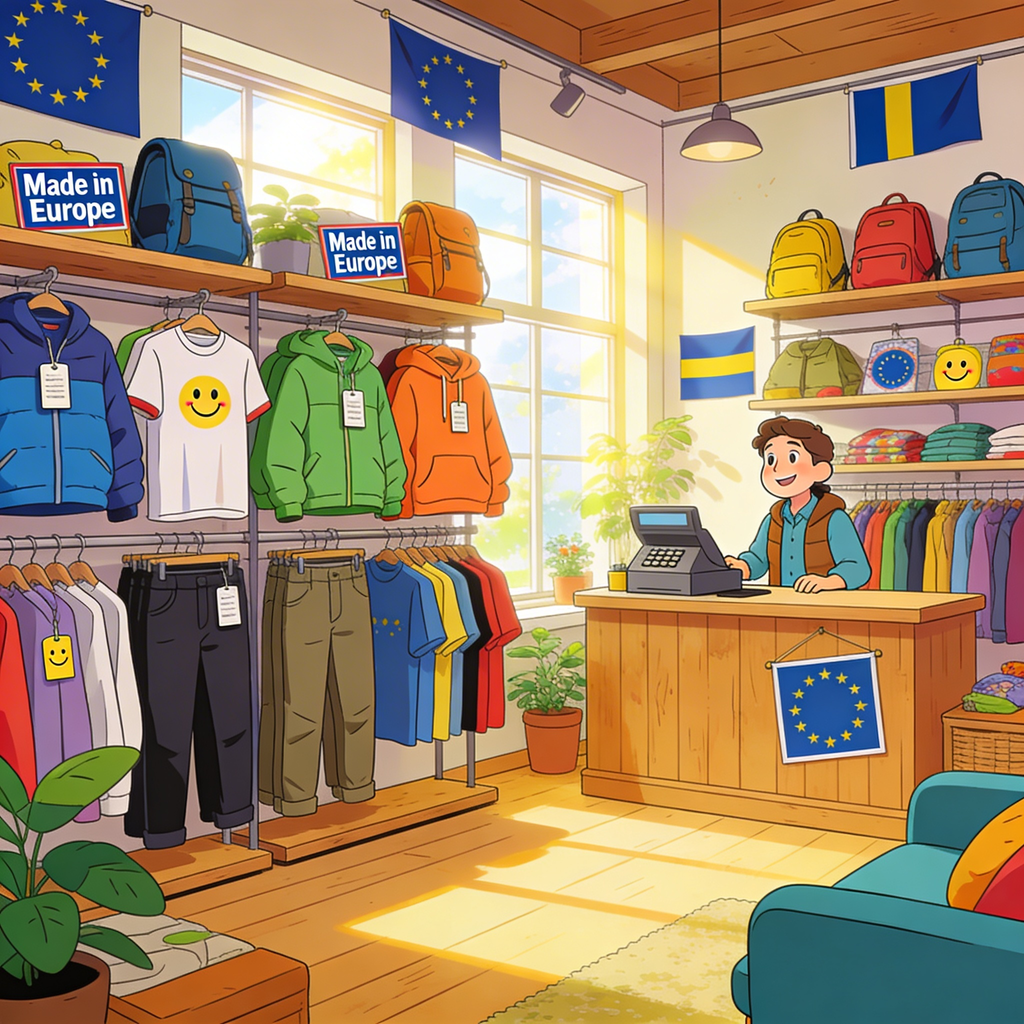
Your local shop is the best starting point — not just for practical reasons, but for an important economic one. Local retailers anchor the economy in your community. They create jobs, pay local taxes, and keep money circulating where you live. That’s worth supporting before you open a browser.
When you walk in, do two things:
- Check the labels. Every garment, every product has one somewhere. It tells you where something was made — not designed, not sourced, but made. That’s the one that counts.
- Ask the staff. This is more powerful than it sounds. Most of the time, they won’t know. That’s not a criticism — it’s simply not information that gets passed down the retail chain. But every time someone asks, that question travels upward. It reaches the buyers. It reaches the decision-makers. Consumer questions shape purchasing decisions. Your voice counts, even in a short conversation at a till.
What Happens Either Way
If you find something made in Europe — that’s a win. You’ve bought local, supported a European maker, and kept the supply chain short.
If you don’t find anything — you’ve still done something useful. You’ve raised awareness. You’ve planted a seed. That shop’s staff now knows that at least one customer cares where things come from. Do this enough times, across enough shops, and it changes what ends up on the shelves.
Either way, you can take one more step: pass it on to InEurope.eu. Found a great European product in a local shop? Let us know — we’ll feature it. Found nothing? We want to know that too.
Step 2: Search Smarter Online
If the local search comes up empty, go online — but search smarter.
Google is not always your best tool here. Its algorithm is built around popularity and advertising. European small-batch producers often don’t rank well on Google, not because they’re not good, but because they don’t have large marketing budgets.
Try these instead:
- Ecosia – a Berlin-based search engine that plants trees with its ad revenue. It often surfaces smaller European producers that Google buries.
- Qwant – a French search engine with a stronger European index and no personal data tracking.
Neither is perfect, but both tend to surface European brands more effectively than Google for this kind of search.
How to Recognise a European Maker Online
Here’s a reliable rule of thumb: European manufacturers are proud of where they make things. If a brand produces in Europe, they almost always say so — on the homepage, in the product description, or in the About section. Look for phrases like “Made in Germany”, “Handcrafted in Portugal”, or “Manufactured in our Czech workshop”.
If you can’t find that information after a few minutes of looking, check the FAQ or Q&A section of their website. That’s often where honest answers live.
If there’s no mention of origin anywhere — no label, no FAQ answer, no About page detail — the probability is high that the product was made outside Europe. Brands that manufacture in Asia rarely hide it, but they rarely highlight it either.
Or Just Search InEurope.eu
You can also skip the search engines entirely and come directly to InEurope.eu. Every week, new manufacturers from across the European continent are added to the directory — covering outdoor gear, casual clothing, and much more. We do the research so you don’t have to.
And if you enjoy doing this kind of research yourself — we’re looking for volunteers. Writing short profiles on European brands, checking origins, building the directory. If that sounds like your kind of thing, get in touch.
This is Part 1 of a practical series on how to buy European. Part 2 will go deeper into reading labels, understanding “Designed in Europe” vs “Made in Europe”, and what certifications actually mean.