

STOOTS
High-Performance Headlamps from France
STOOTS is a French maker of technical headlamps for activities including trail running, bikepacking, alpinism and caving. Its headlamps are designed and manufactured in Coublanc, Burgundy, where the production process includes electronic board assembly and programming, lamp assembly and testing. Electronic components themselves come from international suppliers.
What makes STOOTS interesting to InEurope is not simply that its headlamps are made in France. It is the way the company approaches the headlamp as a system: light distribution, electronics, battery, mounting and weight all influence how useful the lamp is outdoors.
At a glance
| Based in | Coublanc, Burgundy, France |
| Brand origins | 2011 |
| Current company | STOOTS SAS, established in 2018 |
| Makes | Technical headlamps and related batteries and mounting accessories |
| Headlamp production | Coublanc, France |
| Official website | stootsconcept.fr |
| Relevant activities | Trail and ultra running, cycling and bikepacking, alpinism, caving and professional use |
| Technical focus | Optics, electronic regulation and modular easyLock architecture |
| Production evidence | Current manufacturer information and information from production partner AGDE |
| Checked | 22 October 2026 |
STOOTS states that its headlamps are designed and manufactured in Coublanc. AGDE, the organisation that manufactures STOOTS lamps there, separately describes the same production activities and says the complete production of the headlamps was transferred to its operation in 2018.

It started with a problem in the dark
The STOOTS story begins in 2011 with engineer and multisport raid participant Florian Desserée.
According to the company’s history, the first STOOTS prototypes were made by Florian himself, including aluminium lamp bodies that he machined. Commercial models followed in 2012. Over the following years, the development expanded to proprietary electronic boards, batteries and, later, custom optics.
The starting point was practical: how to combine weight, useful light and runtime for people spending hours moving outside at night.
That is a more interesting question than simply asking how many lumens can be put on a specification sheet.
A headlamp can produce a lot of light without necessarily putting that light where someone needs it. Beam shape, colour characteristics, electronic regulation and runtime can all influence what the user actually sees.
We explore these questions in more depth in our Understanding headlamp light dossier.

STOOTS traces its origins to prototypes developed by Florian Desserée in 2011.
From prototypes to production in Coublanc
The history of the brand and that of today’s company are not quite the same.
The current company, STOOTS SAS, was created in August 2018. Public company records show that it acquired an existing headlamp business from SPLIP later that year. Tony Marais has been president of STOOTS SAS since its creation.
2018 was also an important year for production.
AGDE in Coublanc says that it began manufacturing STOOTS high-performance headlamps after Florian Desserée proposed that it take over management of production. AGDE explains that Florian wanted to devote more of his attention to design and invention rather than production management. The complete manufacturing of the headlamps was then transferred to AGDE.
That makes the manufacturing model more interesting than a simple image of a founder building everything himself.
STOOTS could continue to develop its products while production moved into an organisation with dedicated manufacturing capabilities. Today STOOTS and AGDE share the same Coublanc address.
For InEurope, factory ownership is not the deciding factor. What matters is where final manufacturing takes place and how well that can be established.
What is actually made in Coublanc?
STOOTS gives considerably more information than simply putting “Made in France” on its products.
The company says that it develops its own electronic boards and optics. Electronic components are purchased from international suppliers, after which the circuit boards are assembled and programmed in Coublanc. Lamp assembly and control also take place there. AGDE describes corresponding activities at its production site.
This distinction matters.
Made in France does not mean that every LED, electronic component or raw material originates in France.
Within InEurope, we use Made in Europe to describe where final manufacturing or assembly takes place. Component and material origin are separate questions.
For STOOTS headlamps, the available public evidence gives us good confidence that final manufacturing takes place in France.
We have not established the manufacturing origin of every separate accessory in the STOOTS catalogue, so we do not extend that conclusion automatically to the entire assortment.
Light is more than a lumen number
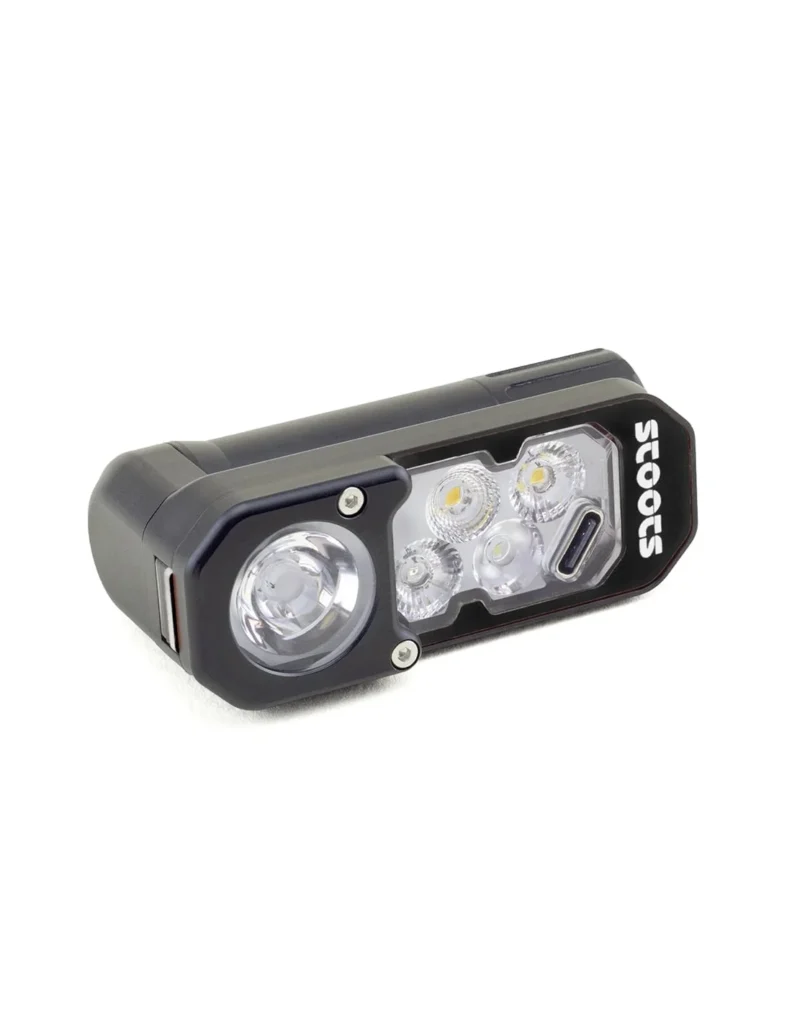
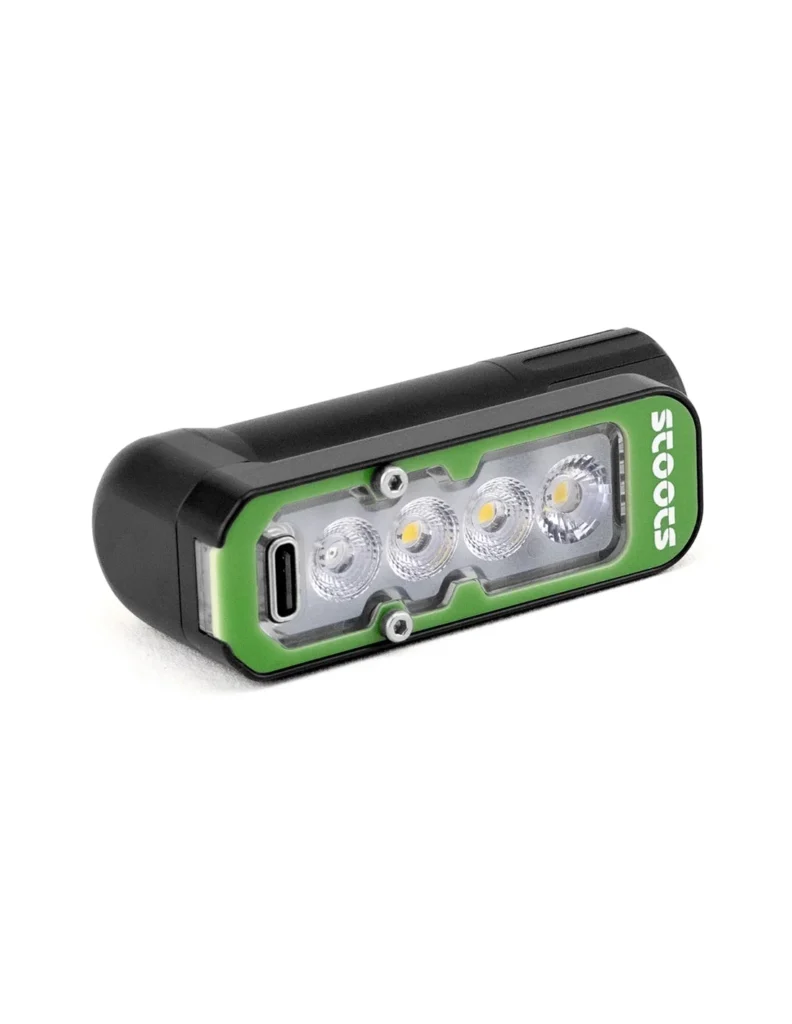
STOOTS uses 4000 K LEDs with a stated CRI of 80 across its current lamps. More distinctive is the way different beam widths are combined.
The KISKA 3, for example, uses wide, medium and narrow beams together. STOOTS calls this approach Mixing Focus.
The current KISKA 3 illustrates why headlamp specifications need to be read carefully. STOOTS lists a maximum output of 1200 lumens, a weight of 89 g including the battery, and a runtime of seven hours at 400 lumens. The 1200-lumen maximum and seven-hour runtime are therefore not specifications for the same output level.
That may sound obvious, but maximum output and maximum runtime are frequently the first figures people see when comparing lamps.
Lumens themselves only describe the total amount of visible light emitted. They do not tell you where that light goes or how useful it will be on a particular trail.
Our dossier Understanding headlamp light looks more closely at lumens, beam width, colour temperature, colour rendering, regulation and runtime — and why none of these numbers should be read in isolation.
From a lamp to a system
Another characteristic of STOOTS becomes clearer when the headlamp is considered as separate parts rather than one fixed object.
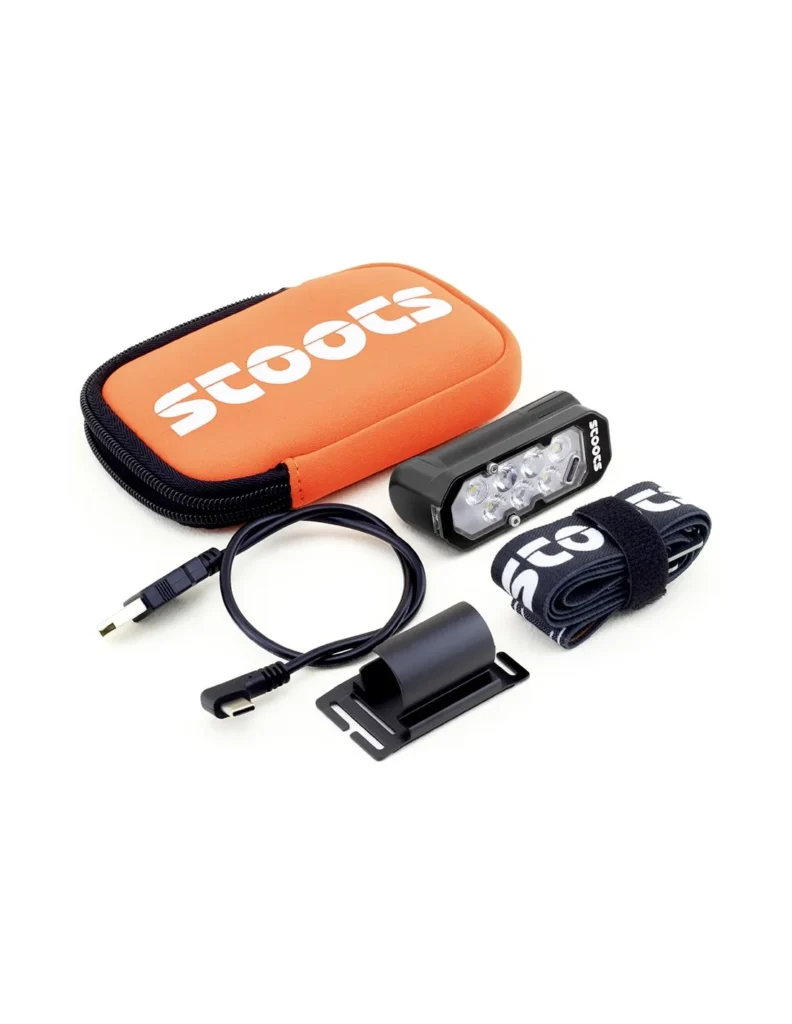
The lamp, battery, head strap and mounting support do not have to form one permanently integrated unit.
STOOTS introduced its third-generation lamps with the easyLock architecture in 2023. The company describes easyLock as a patented system in which the lamp can be removed from one support and fitted to another.
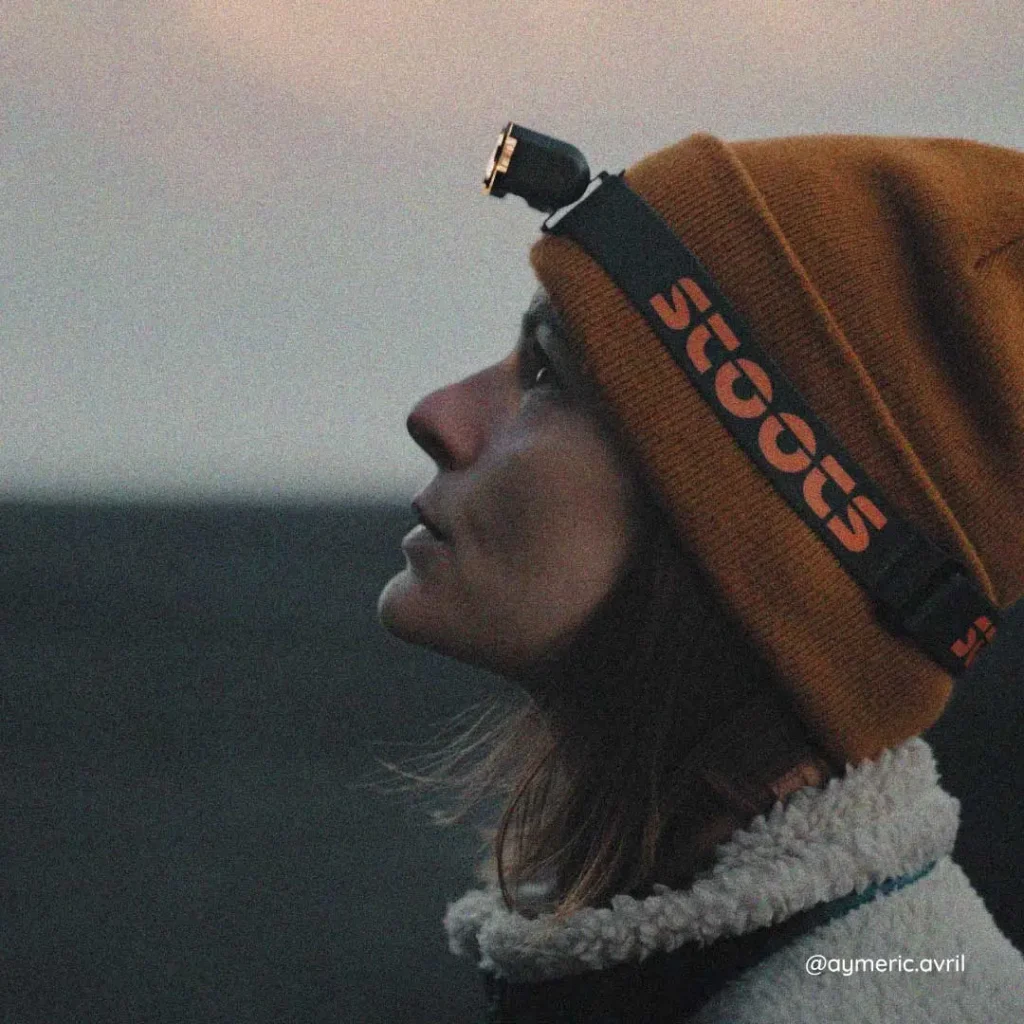
That allows the same lamp to be used with a head strap, helmet or various bicycle and equipment mounts.
There is, however, an important compatibility detail. STOOTS currently uses two main easyLock families. MISTI 3, HEKLA 3, KISKA 3 and OPALO 3 use easyLock 18, while FUJI, TAMU and YETI use easyLock 21. Accessories are shared within each system, but easyLock 18 and easyLock 21 should not be treated as one universally interchangeable platform.
For someone building up several batteries and mounts, that distinction is worth checking before buying.
Why this approach is interesting
It would be easy to reduce STOOTS to a story about French manufacturing.
That would miss the more interesting part.
The brand began with a practical problem experienced outdoors. Over time, that led to its own electronics and optics, a modular architecture and a specialised production arrangement in Coublanc.
Keeping development and manufacturing close together can also shorten the distance between a product decision and the people who have to build it. STOOTS itself emphasises that its offices are located next to the production workshop.
That does not prove that a STOOTS headlamp is better than one made elsewhere.
Nor does French manufacturing by itself establish superior quality, environmental performance or working conditions.
What it does give us is a relatively visible production model in which a meaningful part of the technical development and final manufacturing can be traced to one place.
That is worth understanding.
Who might STOOTS suit?
STOOTS is particularly relevant to people for whom a headlamp is more than an occasional source of light around a campsite.
Its approach may make sense for long-distance runners, night cyclists and bikepackers, mountaineers, cavers and others for whom runtime, beam distribution, replaceable batteries or different mounting positions matter.
Someone who uses a headlamp only occasionally may simply not need this level of engineering or modularity.
There are also trade-offs. Choosing between models means looking beyond maximum lumens, and the two easyLock systems make compatibility something to pay attention to.
InEurope has not independently measured STOOTS’ lumen output, beam reach, runtime or optical efficiency. Where those specifications appear on this page, they are manufacturer specifications rather than InEurope test results.
Why we find STOOTS worth discovering
STOOTS does not need to make the brightest headlamp in the world for its story to be interesting.
What stands out is the chain between use, engineering and manufacturing.
A problem encountered outdoors led to prototypes. Those prototypes developed into proprietary electronics and optics. Production later moved into a specialised manufacturing environment in Coublanc. And the headlamp itself gradually became a modular system rather than one closed object.
It is a good example of why InEurope wants to look beyond a Made in Europe label.
The interesting question is not simply where something is made.
It is also what is being made there, which knowledge remains there, and why the product was designed that way.
Related knowledge
Understanding headlamp light
What lumens actually tell us — and what they don’t. Explore beam width, colour temperature, CRI, regulation, runtime and the way terrain and weather influence what you see.
Sources and editorial information
Headlamp production: Coublanc, Burgundy, France
Production evidence: Current STOOTS manufacturing information; production information from AGDE
Current manufacturer information checked: 22 October 2026
Manufacturer fact-check: Not requested for this update. This page was prepared using publicly available evidence. STOOTS has not reviewed this version before publication.
Main sources
STOOTS — Our history
Used for the development timeline from the first prototypes in 2011 through the introduction of easyLock.
STOOTS — Workshop / manufacturing
Used for information about design, circuit-board assembly and programming, final assembly, testing and the international sourcing of electronic components.
STOOTS — Technologies
Used for current manufacturer information about LEDs, colour characteristics, optics and electronic regulation.
STOOTS — KISKA 3
Used for current model specifications and the Mixing Focus configuration.
STOOTS — Accessory compatibility
Used to distinguish the easyLock 18 and easyLock 21 systems.
AGDE — Company history
Used as supporting evidence for the transfer of STOOTS headlamp production to Coublanc in 2018 and for the manufacturing activities carried out there.
French company records
Used to distinguish the history of the STOOTS brand from that of the current STOOTS SAS company.
InEurope — Understanding headlamp light
Technical context for interpreting headlamp specifications.
Author: Jakob De Proft
Last material update: 22 October 2026








One Comment
Comments are closed.