
ORTLIEB — It Started with a Wet Sleeping Bag
How a rainy cycling trip in England led to waterproof panniers, a German manufacturing business and a new approach to developing technical fabrics.
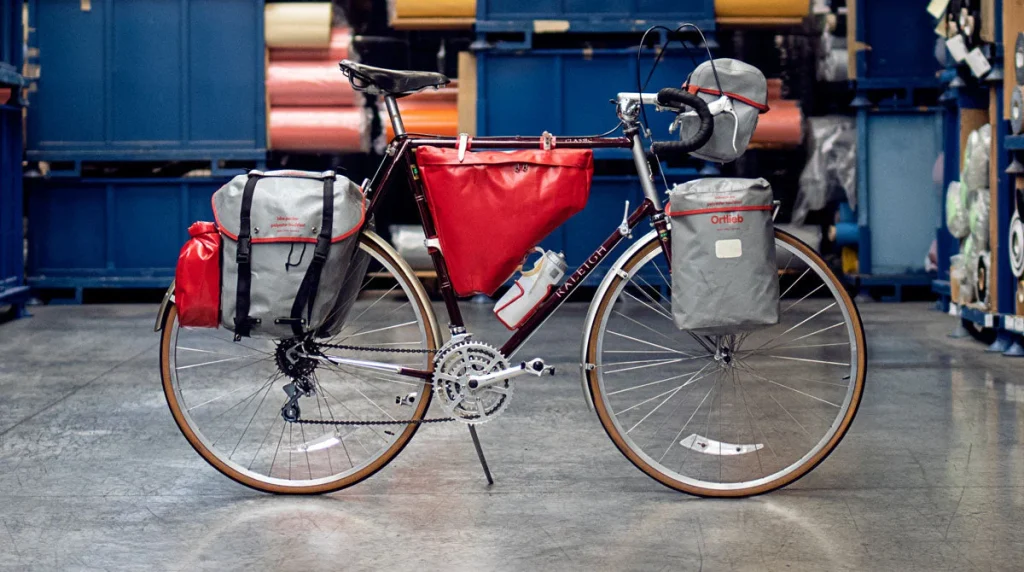
Hartmut Ortlieb was cycling through the English countryside when the rain began to fall. His clothes were soaked. So was his luggage. And, worst of all, the sleeping bag he would need that night was wet.
Then a lorry passed him.
Its cargo was protected by a simple tarpaulin. While the cyclist struggled with wet equipment, the goods underneath that sheet of material remained dry.
It was a remarkably simple observation. Why could a lorry keep its cargo dry when a cyclist couldn’t?
That question would change Hartmut Ortlieb’s life.
A sewing machine and a piece of tarpaulin
Back home in Germany, Ortlieb began experimenting.
He used red truck tarpaulin, his mother’s sewing machine and hooks from a local hardware shop to build his own bicycle panniers.
They weren’t elegant. They weren’t particularly sophisticated. But they offered something that conventional panniers at the time struggled to provide: protection against heavy rain.
Friends and fellow cyclists became interested. Soon, Hartmut was making bags for other people.
In April 1982, he officially founded ORTLIEB in Nuremberg. What began as an attempt to solve one cyclist’s problem was becoming a business.
But the first bags had a weakness.
The material was waterproof. The seams weren’t.
Stitching created tiny holes, and covering them with tape was only a partial solution. It worked reasonably well, but not well enough for someone determined to keep equipment dry in all conditions.
The problem wasn’t the fabric. It was the seam.
In 1984, Hartmut Ortlieb introduced high-frequency welding.
Instead of stitching the coated fabric together, the new process fused pieces of material into a waterproof connection.
That changed much more than the construction of a bicycle bag.
It meant that ORTLIEB’s success would depend not just on designing products, but on understanding materials, machinery and manufacturing processes.
A waterproof bag is a system. The fabric, the seams and the closure must all work together. A weakness in any one of them can make the entire bag fail.
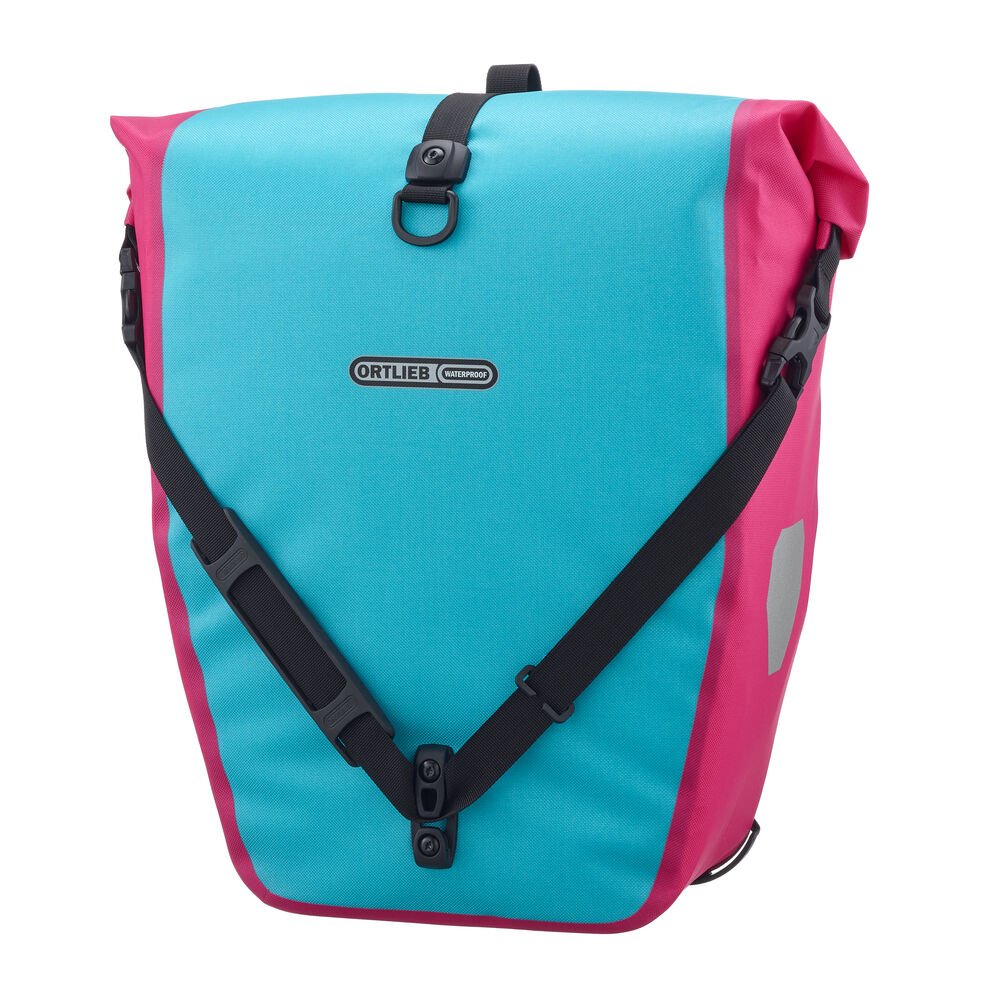
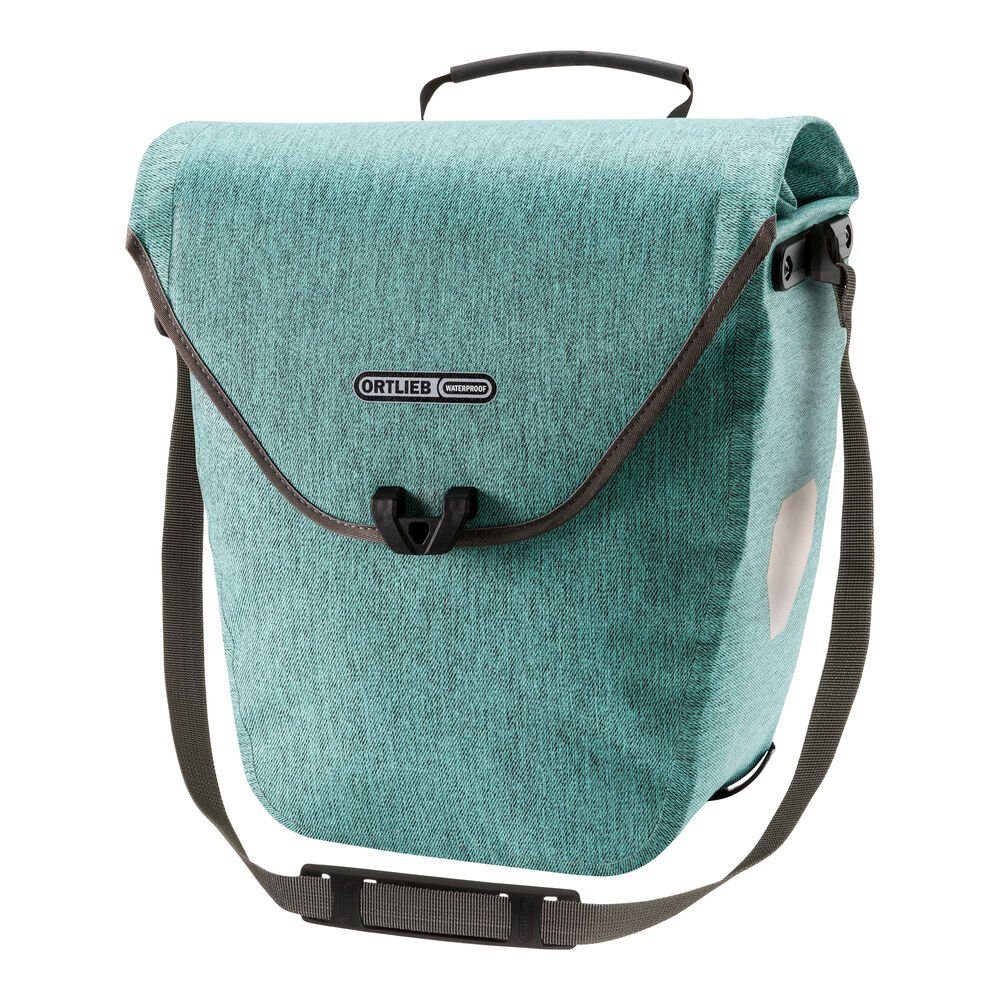
Over the following decades, ORTLIEB developed into a specialist manufacturer of waterproof bags and luggage. In 1997, the company moved to Heilsbronn in Bavaria, where it continues to develop and manufacture its waterproof products.

From making bags to making the material
More than four decades after that rainy cycling trip, ORTLIEB is still working on the same fundamental challenge: keeping water out.
But the latest developments go beyond the bag itself.
With TIDURA®, ORTLIEB has developed a PVC-free coated fabric designed specifically for its own manufacturing processes.
The interesting part is where — and how — it is made.
The polyester base fabric is woven in Belgium. It is then transported to Heilsbronn, where GDS, an ORTLIEB sister company, applies a waterproof TPU coating. The resulting material is processed into bags using ORTLIEB’s welding technology.
Fabric development, coating and bag construction are designed to work together. Instead of simply selecting an available material from a supplier’s catalogue, ORTLIEB can influence how the material is produced and how it performs in the finished product. ORTLIEB BeNeLux+1
That doesn’t mean ORTLIEB has eliminated PVC from all its products. The company still uses it where it considers the material appropriate. Nor does manufacturing waterproof bags in Germany automatically mean every component or accessory is European.
But TIDURA illustrates something important: European manufacturing can involve far more than the final assembly of a product.
It can involve retaining the technical knowledge and production processes that make the product possible.
Still solving the same problem
ORTLIEB also designs its bags with repair in mind. Damaged fasteners, buckles and other components can often be replaced, and the company operates its own repair service.
According to ORTLIEB, approximately 70% of cases handled through its repair network can be repaired.
It is a philosophy that connects the earliest homemade panniers with today’s highly engineered products.
A bag should keep its contents dry. It should survive years of use. And when something breaks, replacing the entire bag shouldn’t necessarily be the answer.
In 1981, Hartmut Ortlieb wanted to protect his sleeping bag from the English rain.
Today, the more interesting part of his story may be how far the company has gone to control the materials and processes behind that simple promise.
It started with a wet sleeping bag. It became a different way of making things.
Quick-Lock2.2
The newer Quick-Lock2.2 system also provides tool-free adjustment for different rack tube diameters.
Related
Brands
More than a product.
Behind European manufacturing are people, ideas and sometimes remarkable decisions. Discover more of their stories.






2 Comments
Comments are closed.