1083: The French Jeans Maker Rebuilding a Lost Industry
What began with a simple ambition to make jeans in France became a much bigger challenge: rebuilding the factories, skills and supply chains needed to produce them.
In 2023, French jeans manufacturer 1083 suddenly found itself in trouble. One of its main fabric-cutting subcontractors had closed, leaving the company struggling to produce enough jeans to meet demand.
For most fashion brands, the obvious solution might have been to find another supplier abroad. But for 1083, that would have undermined the very reason the company existed.
The problem was painfully ironic. For ten years, 1083 had been working to rebuild the French denim industry. Now, the disappearance of just one workshop threatened everything it had achieved.
A thousand pairs instead of a hundred
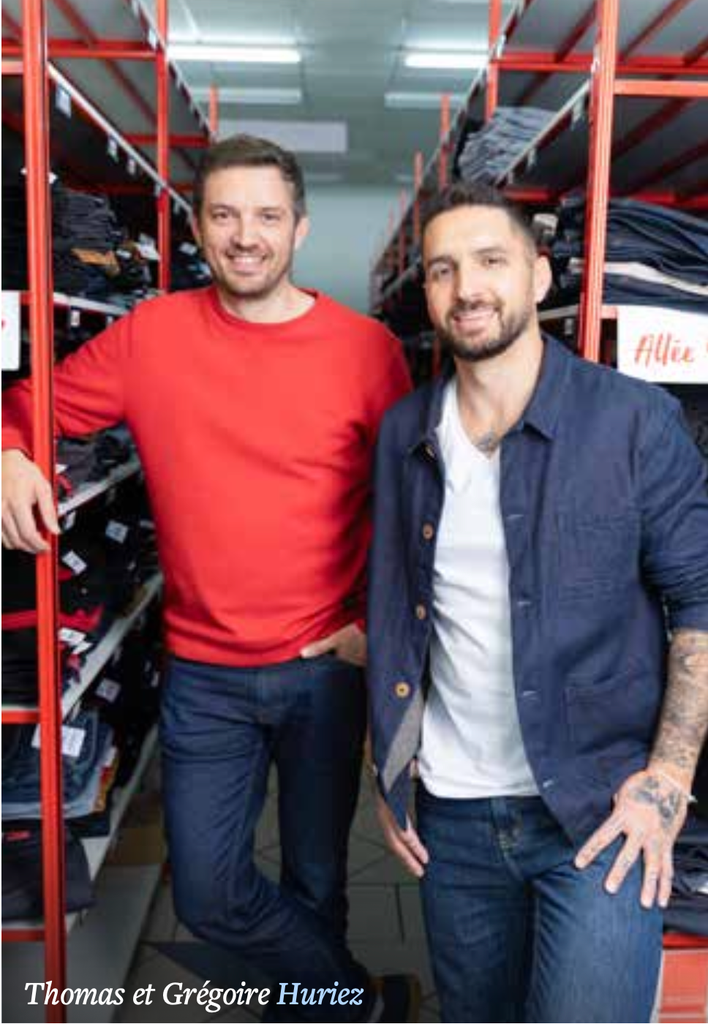
The story began in 2013 in Romans-sur-Isère, a French town once famous for its shoemaking industry.
Thomas Huriez was running a small ethical clothing shop when he and his brother Grégoire decided to attempt something that had become remarkably unusual: making jeans in France.
It wasn’t simply a question of finding someone who could sew. Producing denim requires spinners, dyers, weavers, cutters, sewing workshops and finishing specialists. Decades of offshoring had left significant gaps in that industrial network.
With the help of two French weaving companies and a sewing workshop in Marseille, the brothers launched their first jeans through a crowdfunding campaign.
The response exceeded expectations. During its first year, 1083 produced 7,000 pairs of jeans and trainers in France.

The new brand was called 1083, after the 1,083 kilometres separating Menton, on France’s Mediterranean coast, from Porspoder in Brittany, the two most distant towns in mainland France. The number became a symbol of the company’s ambition to keep manufacturing close to home.
Rebuilding more than a brand
As demand grew, 1083 began investing directly in French manufacturing.
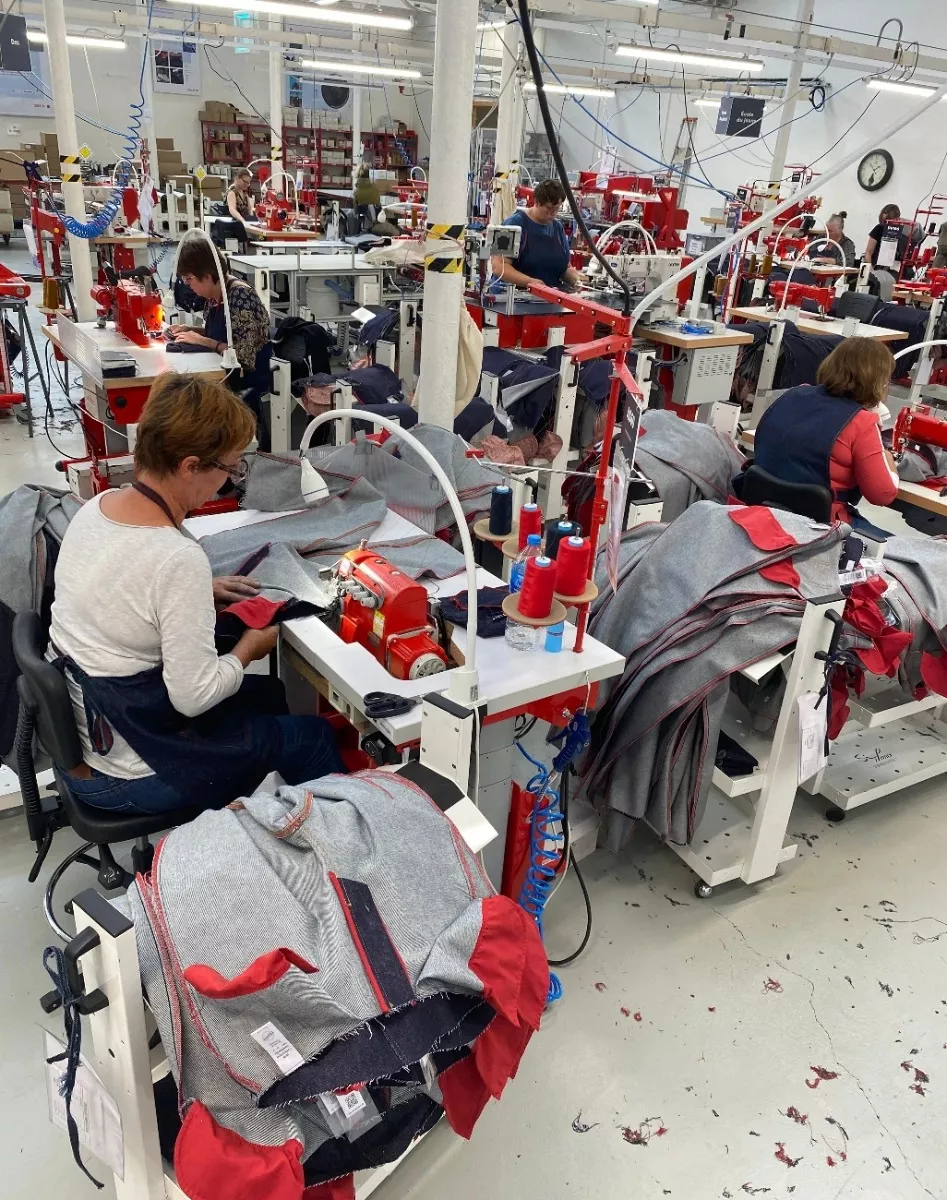
In 2018, the company helped rescue its struggling denim supplier in the Vosges, creating Tissage de France. Three years later, it established another jeans-making workshop in the region.
The company gradually assembled a network of around 30 French workshops and suppliers. All its denim is woven in France, and its jeans carry the Origine France Garantie certification. That doesn’t mean every ingredient is French. Most of the organic cotton comes from countries such as Tanzania and Benin.
In 2022, 1083 even began growing cotton in France. The following year, it developed jeans combining 50% French-grown cotton with 50% locally recycled cotton.
Production fell, shops struggled with shortages, and the company recorded substantial losses. In 2024, 1083 established its own cutting workshop in Romans-sur-Isère, but financial difficulties continued.
The experience revealed something easily overlooked in discussions about bringing production back to Europe.
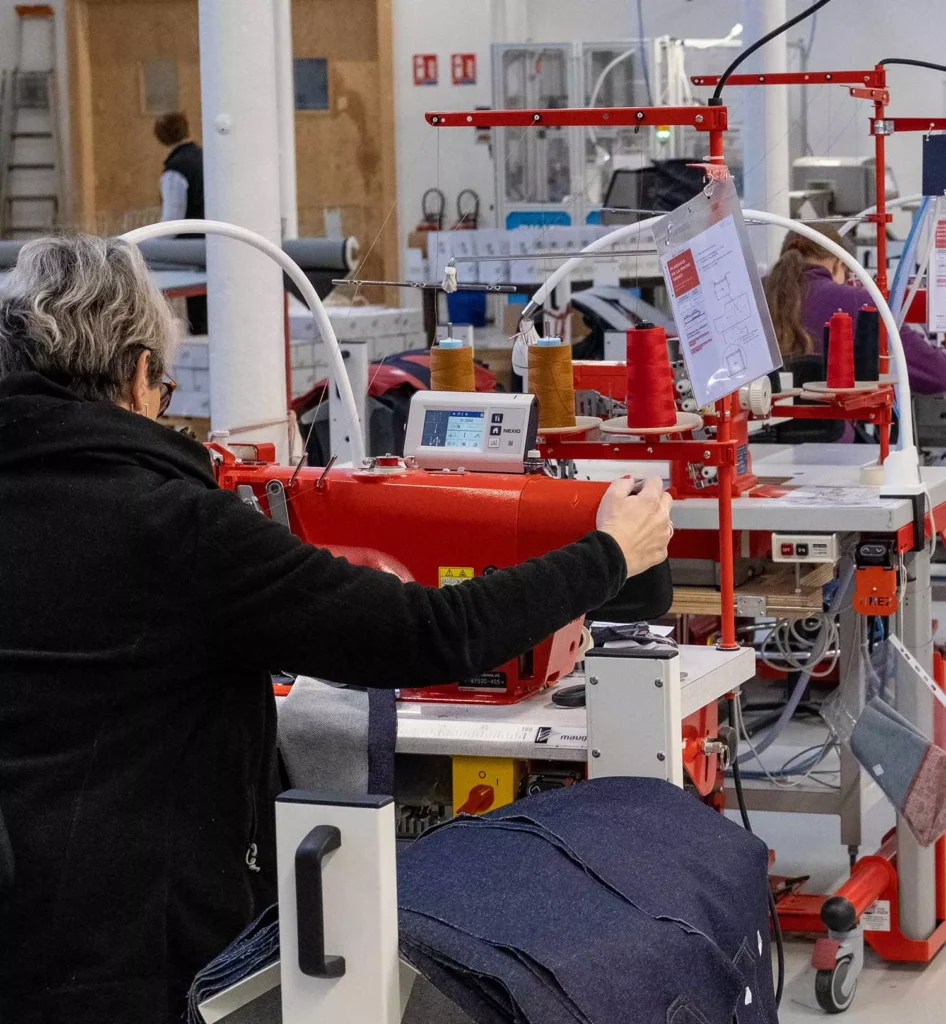
A factory cannot operate in isolation. It needs specialised machinery, reliable partners and, above all, people who know how to use them.
By 2025, 1083 had returned to profitability, selling 50,000 pairs of jeans that year and generating €8 million in revenue.
But the company had learnt something beyond the economics of manufacturing. Machines and factories can be bought. Industrial skills, relationships and knowledge take years to develop — and can disappear remarkably quickly.
Making jeans in France was the original ambition. Keeping an entire industry capable of making them may prove the greater achievement.
In 2017, 1083 established the École du Jeans to train people in the skills needed to manufacture denim clothing.