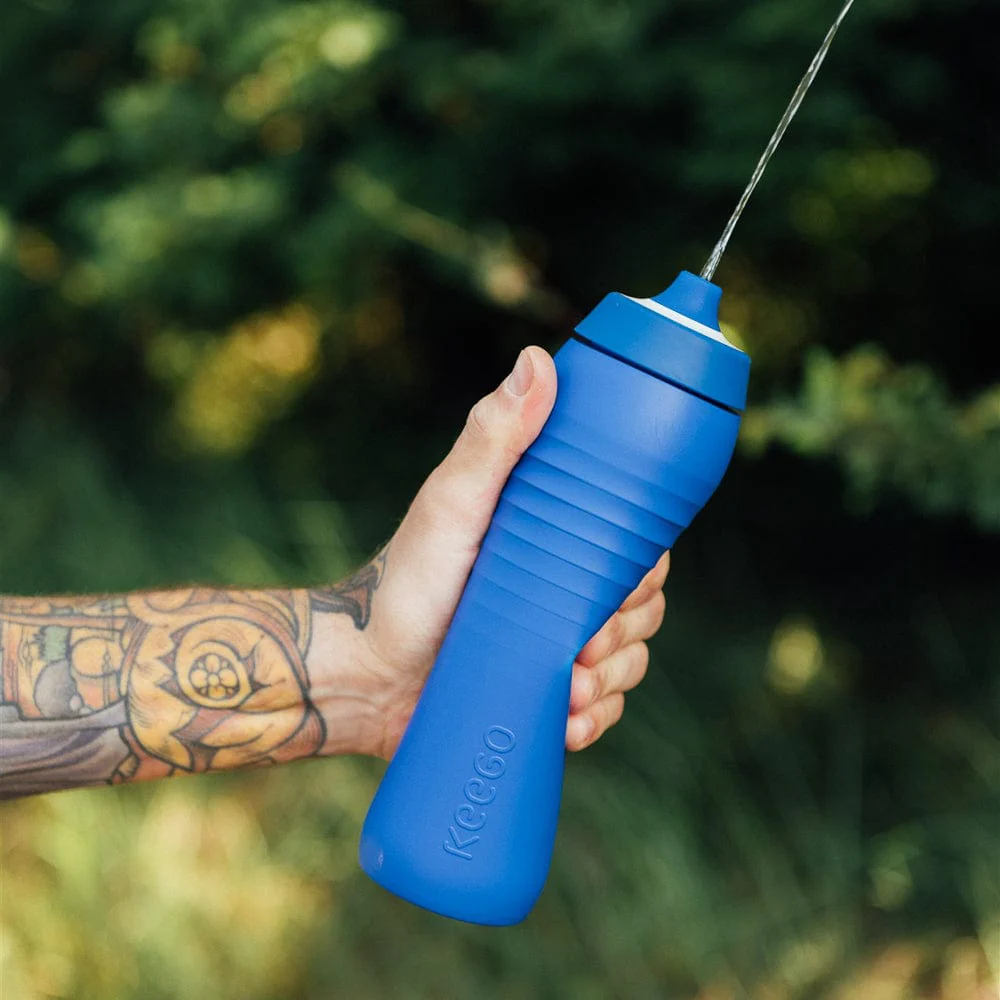

KEEGO — The Bottle That Was Harder to Make Than to Sell
How an Austrian entrepreneur set out to improve the humble sports bottle, attracted thousands of customers before he could manufacture it, and spent years learning that a good idea is only the beginning.
The first KEEGO bottles had a rather serious problem.
They broke when dropped.
For an ordinary sports bottle, that would be disappointing. For a company that had spent years developing an entirely new material, invested in specialised manufacturing technology and convinced thousands of people to pay for a bottle that did not yet exist, it was potentially disastrous.
By 2018, 3,535 people had backed KEEGO’s crowdfunding campaign. They were waiting for a revolutionary new sports bottle.
Unfortunately, making one was proving considerably harder than selling the idea.
An invention nobody asked for
The story began in June 2016, during a walk on the Hochkönig mountain in Austria.
Lukas Angst, a keen hockey player with a background in business development, was thinking about something most people barely notice: the taste of water from a sports bottle.
Plastic bottles were practical. They were cheap, lightweight and squeezable, allowing cyclists and other athletes to drink without stopping. But Lukas disliked the taste that plastic bottles sometimes gave their contents.
Metal bottles offered a different drinking experience, but they had one obvious limitation. You could not squeeze them.
Lukas wondered whether the two could be combined. A bottle that behaved like plastic but kept the drink in contact with metal.
It sounds like the sort of idea someone might have over breakfast, sketch on a napkin and forget before lunch.
Lukas did not forget it. He left his job that same year and started looking for a way to make it happen.
How do you make metal bend?
The first year was largely a catalogue of unsuccessful experiments.
Elastic glass, spring steel, pumping mechanisms, origami-inspired structures and different metal-forming techniques were investigated. Some solutions were too heavy. Others were too fragile, expensive or difficult to manufacture.
Then, in May 2017, a collaboration with Austria’s Montanuniversität Leoben produced a promising idea.
Instead of making the entire bottle from flexible metal, why not develop a multilayer material with an extremely thin titanium surface on the inside?
The outer layers could provide the flexibility. The titanium would form the surface in contact with the drink inside the bottle.
A Danish laboratory confirmed that the technology could be applied to a bottle-shaped object.
It was a significant breakthrough, but it created another challenge. KEEGO could not simply send a design to an existing bottle factory. The manufacturing process itself needed to be developed.
The company eventually found a specialist manufacturer with expertise in particle accelerator technology. Even then, adapting the equipment proved difficult. KEEGO+1
A sports bottle was turning into an unusually complicated engineering project.
The customers arrived before the bottles
In March 2018, KEEGO launched a crowdfunding campaign with a relatively modest target of €25,000.
The target was reached on the first day.
By the end, the campaign had raised €277,573 from 3,535 supporters.
It was impressive evidence that people wanted the product. What it did not demonstrate was that KEEGO could manufacture it reliably.
Production slipped behind schedule. The first bottles failed quality expectations, including surviving a drop onto the ground. The material composition had to be revised and the manufacturing partner changed.
Money became tight. The team was reduced, and additional funding and grants helped the company survive.
Lukas had initially expected development to take about two years. It took almost three before the first customers received their bottles.
A new Swiss production partner finally helped bring the project into series production in 2019. Deliveries to crowdfunding supporters began in June, more than a year after the campaign.
For KEEGO, crowdfunding had solved one problem while creating another: thousands of people now had expectations that the company had to fulfil.
A European manufacturing story with an unexpected twist
KEEGO’s current production is distinctly European, although not concentrated in one factory.
According to the company, the flexible bottle bodies are manufactured in Germany, near Cologne. The specialised titanium coating is applied in Denmark, before the bottles return to Germany for packing and storage.
There is an interesting detail behind that arrangement.
In a 2025 interview with the Austrian newspaper Der Standard, Lukas revealed that production in China had once been considered. Those plans were abandoned during the pandemic.
Today, the company relies on specialist European partners. But European manufacturing does not eliminate the difficulties of scaling production. Finding skilled workers, coordinating suppliers and expanding a highly specialised manufacturing process have all constrained growth.
In July 2024, another problem arrived.
A fire damaged the Danish production facility, including the specialised equipment needed to finish KEEGO bottles. Because the machinery had been custom-built, the company could not simply switch to a standard production line.
Production was disrupted for months.
By early 2025, manufacturing had resumed. In March 2026, Lukas described the previous year as a comeback, explaining that KEEGO had used the recovery to build a more robust production system.
There is a certain irony in the company name.
KEEGO is derived from two words: Keep going.
After all that engineering, what do customers actually value?
Titanium is expensive. Creating a multilayer material is complicated. Specialist production machinery requires substantial investment.
Surely customers must be fascinated by the technology?
Not necessarily.
In a customer survey discussed by Lukas in March 2026, more than 1,400 KEEGO users were asked about their experiences.
Their most important reason for using the bottle was remarkably straightforward.
Taste.
Health considerations followed, along with the convenience of using one bottle for sport, work and travel. The company also reported a Net Promoter Score above 60, indicating strong willingness among respondents to recommend the product. KEEGO
The distinction matters.
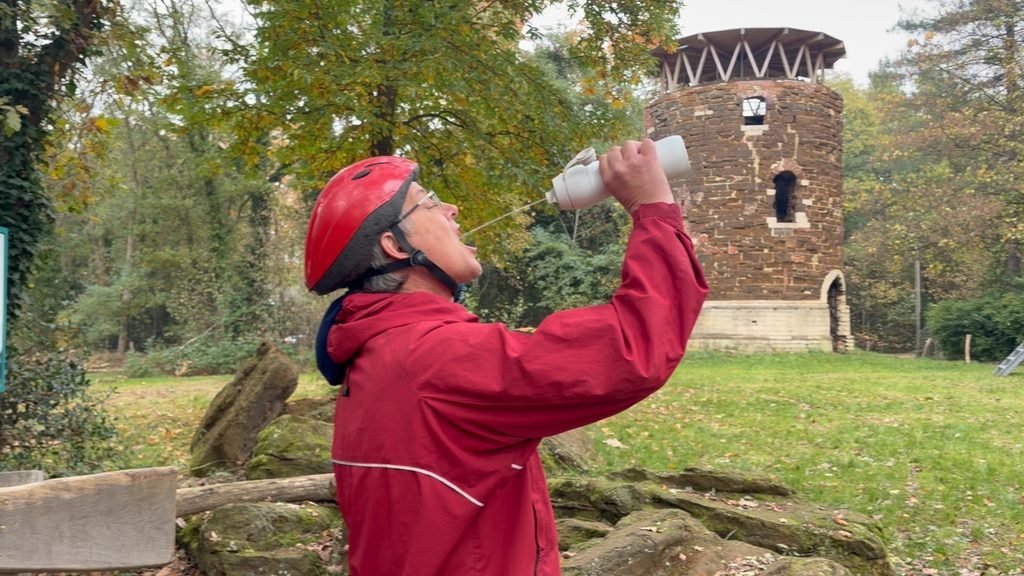
Customers do not necessarily want titanium. They want water that tastes like water, from a bottle they can squeeze while cycling.
And while KEEGO argues that its bottles last substantially longer than conventional plastic alternatives, the environmental advantage depends on how long people actually use them. A sophisticated multilayer bottle is not automatically a more sustainable choice simply because it contains titanium or is manufactured in Europe.
For Lukas, making something that people genuinely prefer using may ultimately be more persuasive than asking them to buy it for environmental reasons.
That brings us back to the ordinary plastic sports bottle.
It was already cheap, lightweight and functional when Lukas began his journey in 2016. There was no obvious reason to reinvent it.
Yet that small dissatisfaction with the taste of water led to years of material research, failed prototypes, production delays, financial difficulties and even a factory fire.
Ten years after the original idea, KEEGO is still making bottles.
And perhaps the most surprising part is that, after all the technology, investment and perseverance, the reason people appreciate them is almost embarrassingly simple.
They just want a good drink of water.
Related
Brands