Seapath
Small-batch clothing from Northern Portugal — and a window into the textile network behind it
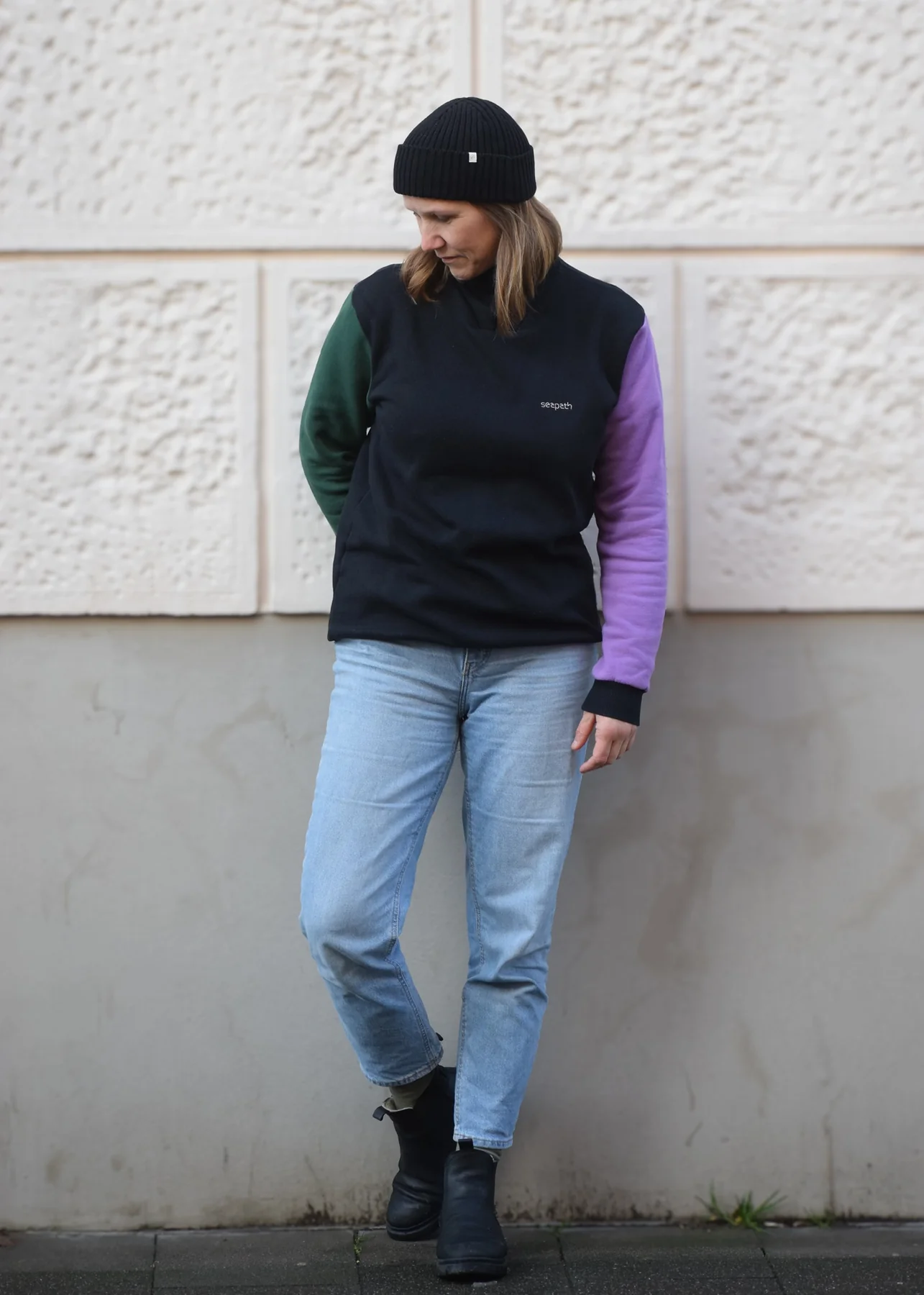
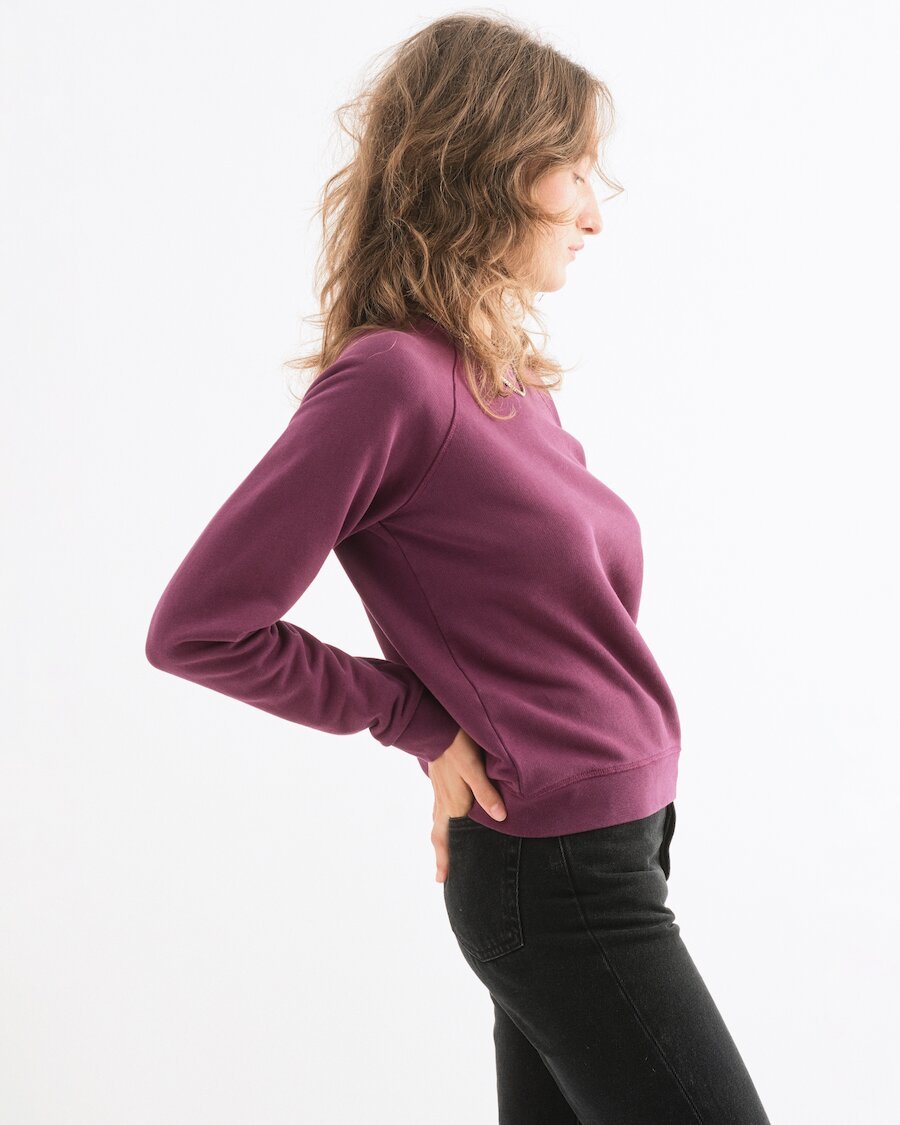
Seapath is a small Portuguese clothing brand founded by Mário and Regi. It makes everyday T-shirts, sweatshirts, hoodies and other casual clothing, with final production in Northern Portugal. Behind the collection is something less visible: a family-run production activity that also manufactures for other brands, supported by specialised textile businesses nearby. SEAPATH
InEurope visited the workshop in Northern Portugal. What we found there changed the way we think about Made in Europe: not necessarily as one factory under one roof, but sometimes as a close network of businesses, machines and people, each contributing a different skill.
At a glance
| Based in | Nine, Northern Portugal |
| Makes | T-shirts, sweatshirts, hoodies, tops and accessories |
| Production | Northern Portugal |
| Production model | Family-run sewing operation with nearby specialist partners |
| Other manufacturing | The production operation also manufactures for third-party brands |
| Materials | Vary by garment; current examples include deadstock cotton, organic cotton, recycled cotton and cotton/polyester deadstock blends |
| Founded by | Mário and Regi |
| Characteristics | Small batches, changing fabrics, regional production network |
| First-hand evidence | InEurope visited the sewing workshop and discussed the production process with Mário |
Seapath currently states that all of its products are made locally in Northern Portugal. Its contact and legal information places the business in Nine, in the municipality of Vila Nova de Famalicão. SEAPATH
Evidence: factory visited by InEurope • current manufacturer information checked • individual current products checked
Checked: 10 October 2026
More than the brand you see online
The visit to Seapath revealed another layer.
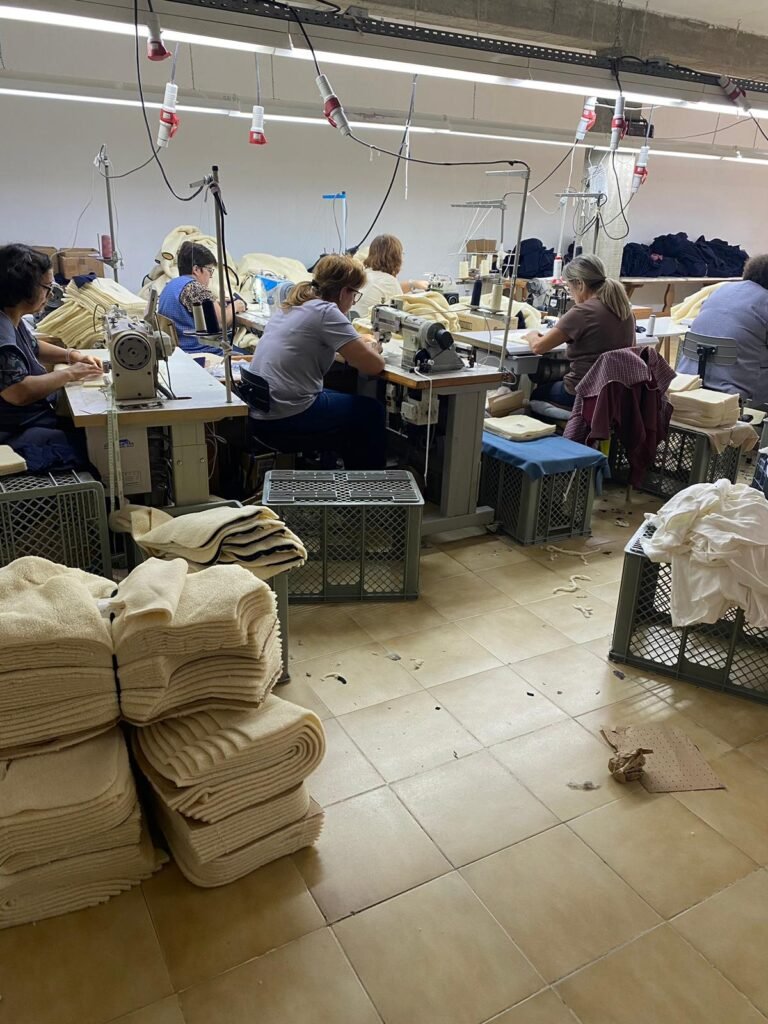
Behind the brand is a working textile production operation. Seapath sells its own collection under its own name, but the family-run production activity also manufactures clothing for other brands. During our visit, the sewing workshop was working on a substantial order for another client.
That distinction matters. A brand and a manufacturer are not necessarily the same thing, even when they are closely connected.
InEurope has not documented the precise legal relationship between the Seapath brand and every part of the family production activity. What is clear is the practical relationship: Seapath has its own collection, while the skills, machinery and production capacity behind it are also used for third-party manufacturing.
A factory that isn’t one factory
The workshop itself was only part of what interested us.
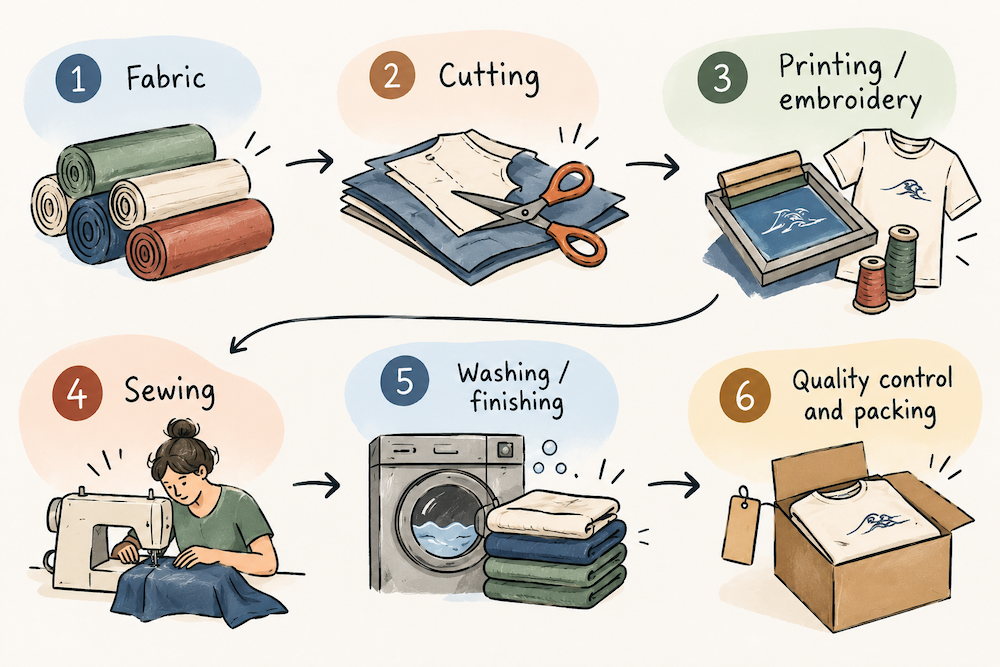
Mário explained that different stages of making a garment can happen at different specialised businesses in the surrounding area. One may cut fabric. Another handles embroidery. Another printing or washing. Sewing takes place in the family production facility. Finishing may involve yet another specialist.
Many of these businesses are within roughly twenty kilometres of one another. That description from our visit still reflects how Seapath describes its current production model: sewing locally, with cutting, embroidery, washing and printing handled in collaboration with nearby partners.
For InEurope, a useful way of understanding this is as a distributed factory.
That is our term, not Seapath’s.
Instead of one company owning every machine and employing every specialist under the same roof, a regional network collectively provides the capabilities needed to make the finished garment.
Inside the workshop
There was nothing monumental about the place.
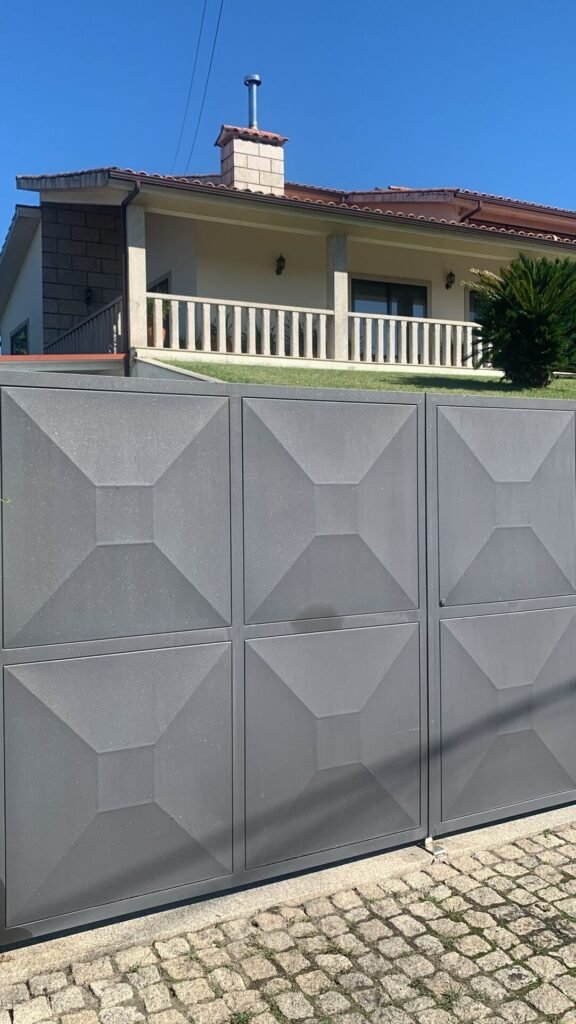
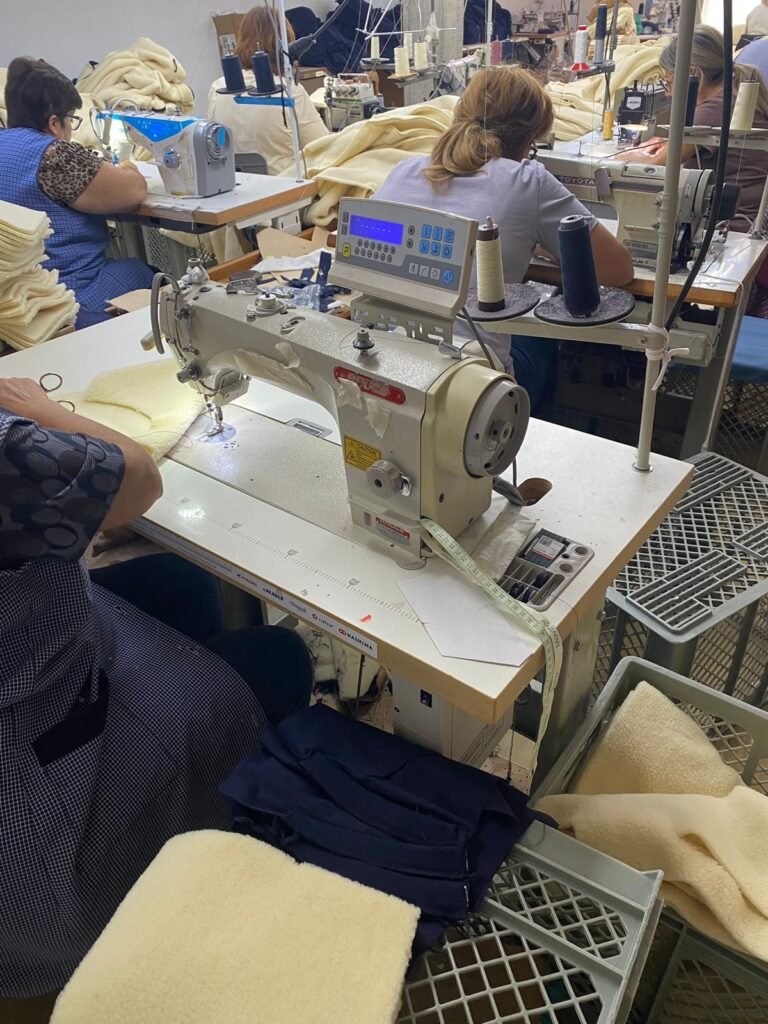
Behind what looked like an ordinary home was a workshop with roughly fifteen sewing machines. People were working. Garments moved through production. There was no visitor centre or carefully staged “factory experience”.
That mundanity was precisely what made the visit interesting.
Much of European manufacturing is easy to overlook because it does not necessarily happen in enormous industrial buildings. A workshop can be embedded in a village or residential street while contributing to products sold much further afield.
Small batches, changing fabrics
Seapath produces in relatively small runs and frequently works with deadstock — fabric that was produced previously but remained unused. The brand also uses organic and recycled cotton, although the exact composition varies from product to product.
That variation is worth making visible rather than reducing Seapath to “a deadstock brand”.
For example, current garments checked by InEurope include a hoodie made from 100% organic cotton deadstock, a sweatshirt made from a 65% cotton / 35% polyester deadstock fabric, and another hoodie made from a blend of organic and recycled cotton.
Deadstock also comes with a practical consequence: when a limited fabric is gone, an identical garment may not return. Seapath explicitly says many such pieces are not restocked.
This does not, by itself, prove that a garment is environmentally preferable. The environmental impact of a product depends on considerably more than whether its fabric was surplus stock. What we can document here is the material choice and the resulting small-batch production model.

65% cotton, 35% polyester (deadstock)
Relaxed unisex hoodie, made in Portugal
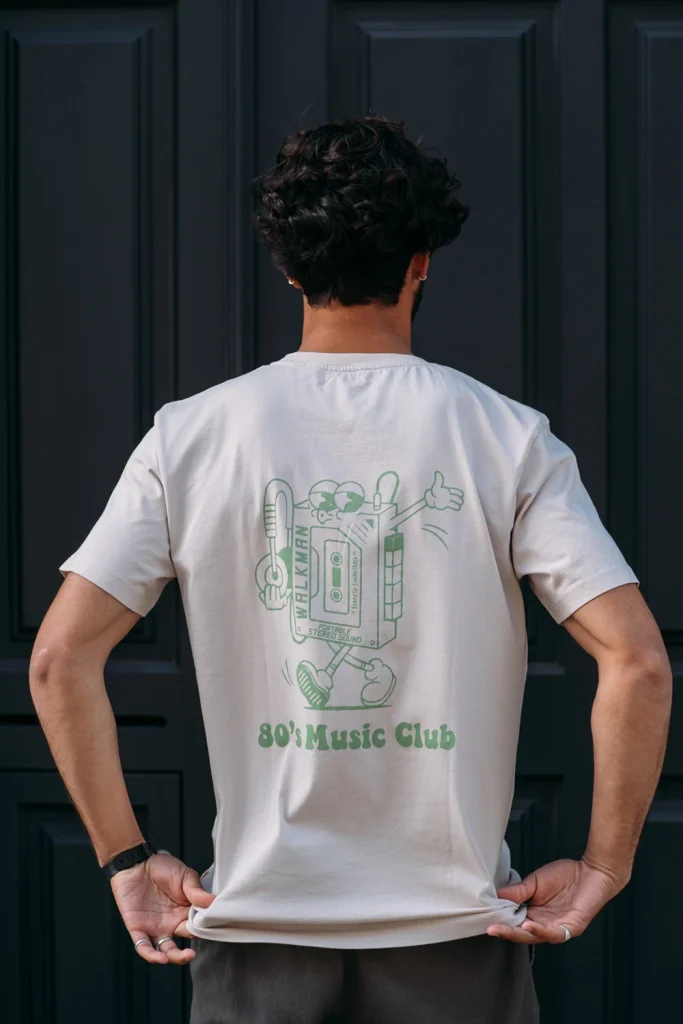
100% cotton from deadstock
Relaxed T-Shirt made in Portugal.
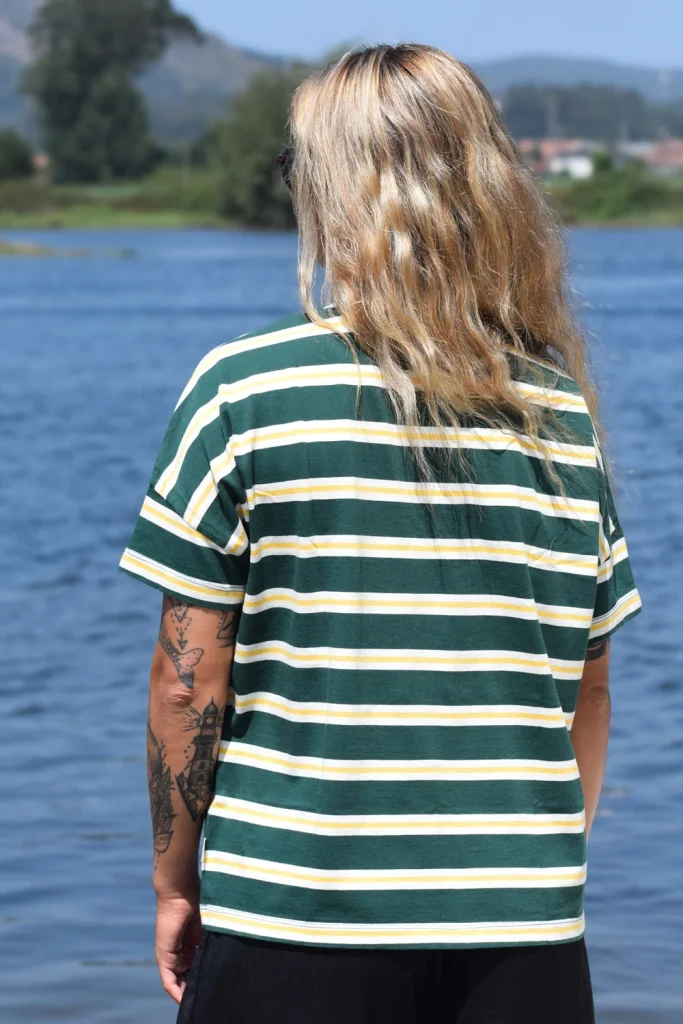
100% cotton from deadstock
Relaxed T-Shirt made in Portugal.
The smallest warehouse we had seen
Near the end of the visit, we wanted to buy a sweatshirt and asked where Seapath kept its stock.
The answer was downstairs.
The stock behind the webshop was stored in a room roughly the size of a large bedroom, with what we remember as perhaps ten or twenty boxes.
That observation dates from our visit; it is not a statement about Seapath’s stock level today.
But it made something visible that online shops rarely show: how small a business behind a professional-looking website can actually be.

Why this production model matters
It would be easy to turn Seapath into a romantic story about “small local makers”.
That would miss the interesting part.
Small companies have disadvantages. Machinery still needs to be paid for. Small production runs cannot spread fixed costs across enormous quantities. Losing one large customer can matter greatly. Marketing and international distribution can be harder.
Third-party manufacturing can therefore be economically important. The workshop is not dependent solely on the sales of one small consumer brand: production for other businesses also helps use its equipment and manufacturing knowledge. We saw that combination first-hand during the visit.
What the local network adds is access to specialised capabilities without requiring one small company to own every machine itself.
That is a manufacturing choice worth understanding. It is not evidence that small is inherently better.
What Made in Portugal does — and doesn’t — tell us
Every current Seapath product is stated by the company to be made in Northern Portugal, and this has also been confirmed to InEurope. Current product pages checked by InEurope consistently identify Portugal as the place of manufacture.
But Made in Portugal does not tell us everything.
It does not mean every fibre originated in Portugal. It does not tell us the environmental footprint of a garment. It does not automatically establish good working conditions or superior quality.
What the label can tell us, once supported by adequate evidence, is where final manufacturing took place.
In Seapath’s case we can go further because we have seen part of the production ourselves: the sewing workshop, some of the people involved and the regional production model behind it.
The visit that changed InEurope
Seapath is not an outdoor brand, and that matters within InEurope’s current scope. We keep developing this page because Seapath belongs to our earlier clothing research and because the visit contributed something that reaches far beyond one clothing label.
Before visiting Portugal, Made in Europe was largely a way for us to identify where products came from.
Seapath added another question:
What actually sits behind those words?
A sewing workshop behind a house. A cutting company a short drive away. An embroidery specialist. A washing company. People and equipment distributed across a region, collectively capable of producing clothing for brands across Europe.
It helped shift InEurope from simply looking for European-made products towards trying to understand the makers and production knowledge behind them.
Who might Seapath suit?
Seapath makes casual clothing rather than technical outdoor apparel.
It may be worth exploring if European final manufacturing matters to you, you like relatively small collections, or you find the idea of clothing produced through a regional manufacturing network appealing.
There are trade-offs. Limited fabrics can mean limited availability and no identical restock. The brand also works with different fibres and blends, so someone looking exclusively for natural fibres needs to check each garment rather than assuming the whole collection follows the same material rule.
And if your priority is technical outdoor performance, Seapath is simply not designed for that purpose.
Related knowledge
This page connects to several wider questions that go beyond Seapath itself:
Portuguese textile manufacturing
How networks of specialised factories and workshops work together.
Deadstock fabrics
What the term means, what it can achieve — and what it does not prove about environmental impact.
Made in Europe
What InEurope means when it uses the term, and why final manufacturing is only one part of understanding a product.
Factory visit: Seapath
Our original visit contains additional photographs and first-hand observations from the workshop.
Sources and editorial information
Production: Northern Portugal
Production evidence: InEurope factory visit; current Seapath manufacturing information; current product pages
Factory visited: Yes
Current manufacturer information checked: 10 October 2026
Manufacturer fact-check: Current production details reconfirmed; the exact legal relationship between the Seapath brand and the wider family production operation remains insufficiently documented to describe in detail.
Main sources
InEurope factory visit — first-hand observation of the sewing workshop, production activity, stock and discussions about the local production network.
Seapath About — current information about founders, the family-run workshop and materials. SEAPATH
Seapath FAQ — current statement that all Seapath products are made in Northern Portugal and that cutting, embroidery, washing and printing can involve local partners. SEAPATH
Seapath Legal Notice — business address and legal entity information. SEAPATH
Current product pages — used to check manufacturing statements and examples of material composition. SEAPATH
Author: Jakob De Proft
Last material update: 10 October 2026