How I Check Whether a Brand Is Really Made in Europe
When people visit InEurope.eu, one question comes back again and again: how can I tell whether a product is really made in Europe?
The honest answer is that it is not always straightforward. Some brands are very open about where they produce. Others stay vague, use soft language, or talk a lot about responsibility without clearly saying where the product is actually made. If you are new to this kind of research, it can take time to separate real European production from clever marketing.
Still, there is a method. Over time, I have built a simple way to investigate brands, and in most cases it starts in the same place: the brand’s own website.
Most European products are exceptionally high quality and will easily outlive mass produced cheaper alternatives.
Start with the brand website
The first thing I do is read the website carefully. Very often, the answer is already there — or the absence of an answer tells you a lot.
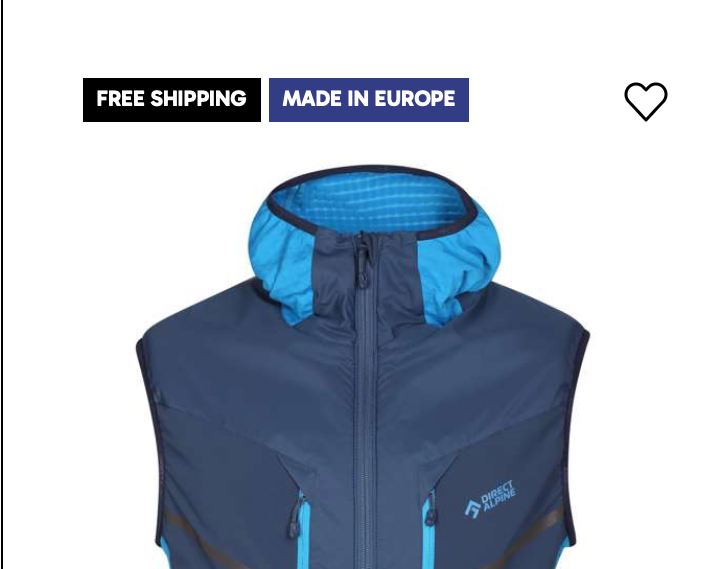
Brands that genuinely make products in Europe are usually proud of it. If production takes place in Europe, they often say so clearly on the homepage, in the About section, or on individual product pages. When that information appears in several places, it is usually a good sign. A brand that is truly making in Europe normally wants customers to know.
This picture is from the website from the Czech brand Direct Alpine. A suspicious mind – as myself – might think that this is just one item that is made in Europe. But they do it for all their pro
Use AI as a first clue, not as proof
I also use AI at the beginning of the process, but only as a starting point.
For a first scan, I often recommend Le Chat by Mistral because it is one of the few European AI alternatives. It can help you spot possible production locations, suggest where to look next, or point you towards useful pages. But it should never be treated as final proof.
AI can misunderstand, guess, or repeat weak information from elsewhere online. I treat it as a lead, not as evidence. A deeper search function can be useful too, especially in paid tools, but even then the result still needs to be checked manually.
In short: AI can save time, but it cannot replace proper research.
Learn to recognise green flags
Once you have looked at enough brands, patterns start to appear. Some signals come back again and again with brands that really do produce in Europe.
One strong green flag is clear, repeated transparency. If a brand says “Made in Portugal”, “Made in Czechia”, or “Made in Italy” on the homepage, in the About section, and on product pages, that is encouraging. It suggests the brand sees production origin as part of its identity, not as a detail to hide.
Another good sign is specificity. Vague claims are easy. Specific claims are harder to fake. If a brand mentions the workshop, the region, the factory, or the people making the product, you have something concrete you can actually check.
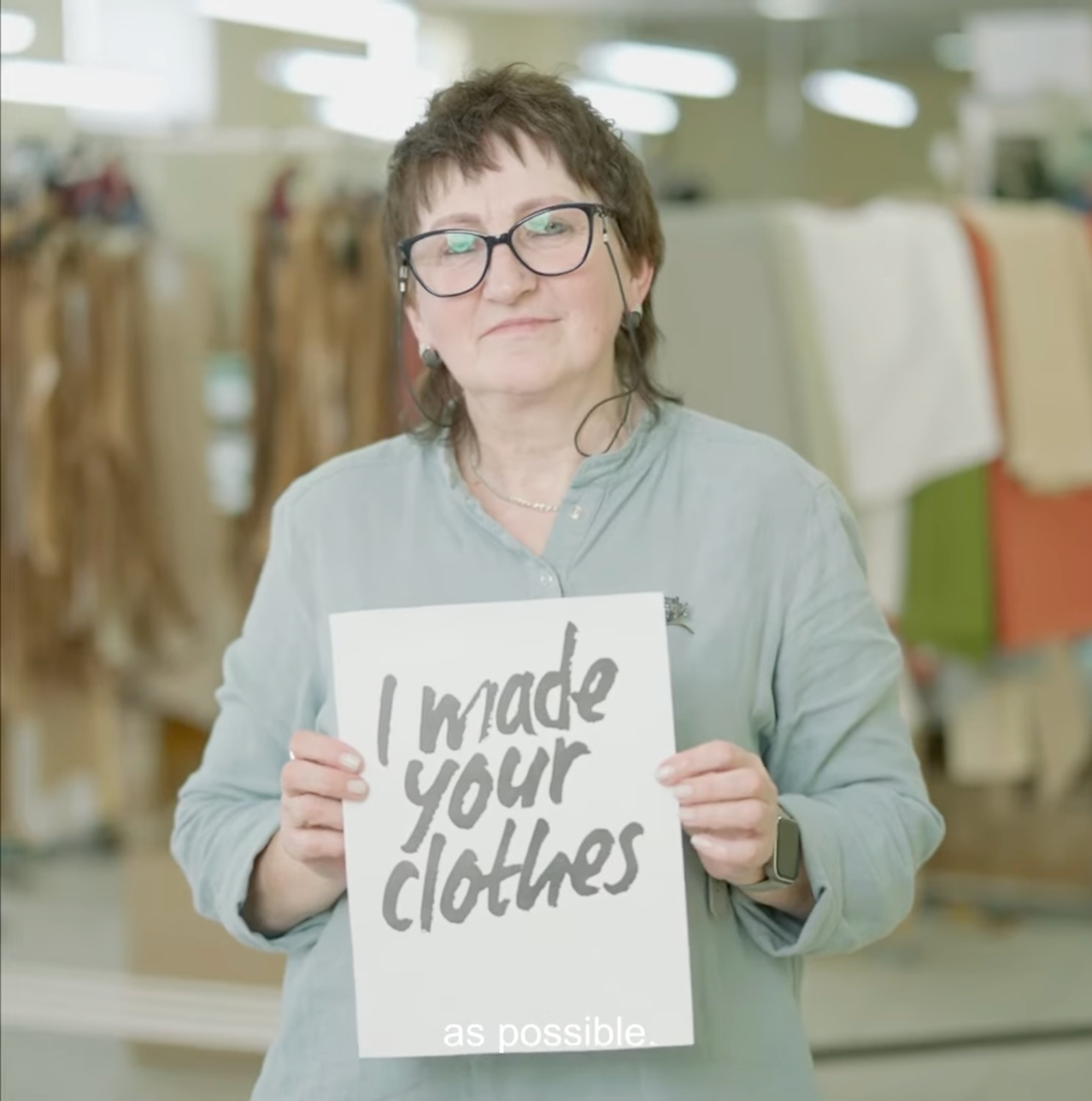
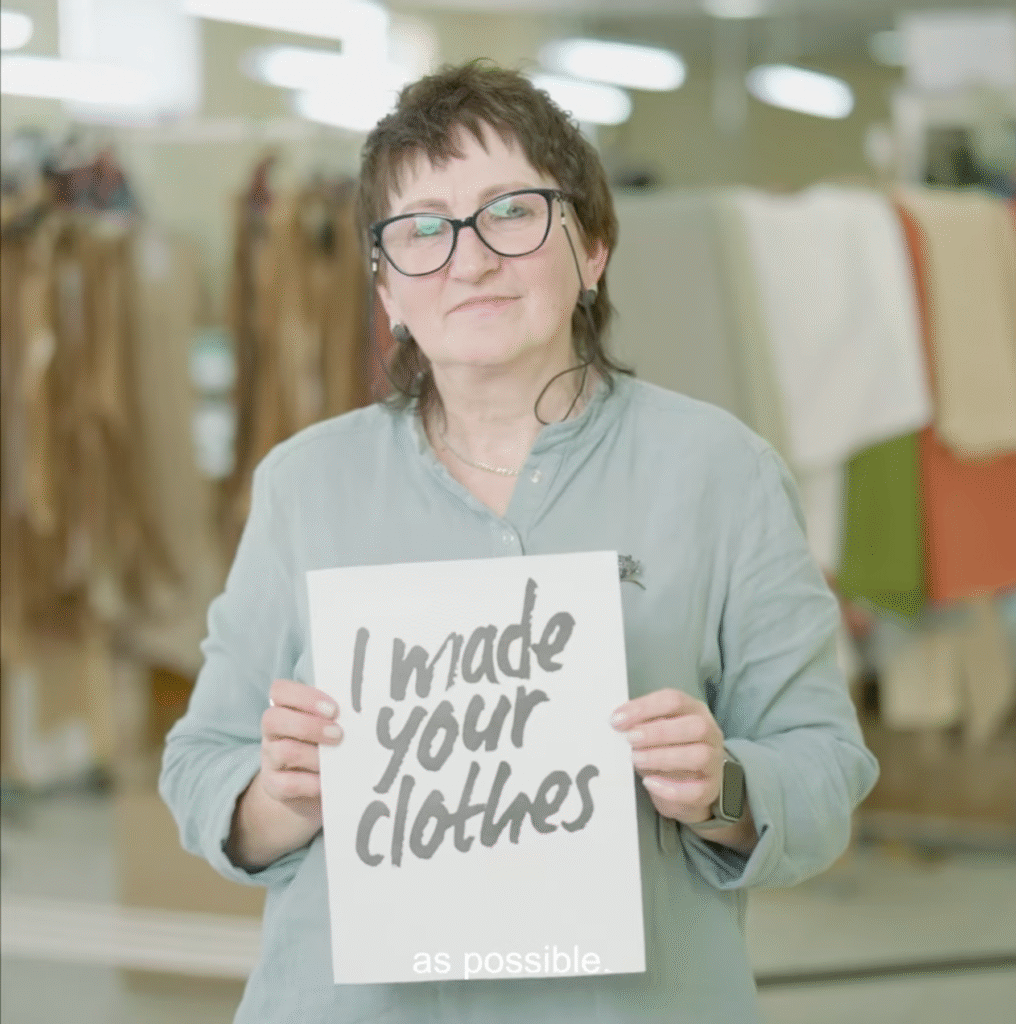
This picture is cut our from a youtube made by the Lithuanian brand “Not-Perfect Linen“
A useful example is Colorful Standard. The brand says its products are made in Portugal and publishes its factory address in Barcelos, even inviting people to visit. That kind of openness is a very strong positive sign.
Another green flag is made to order. It does not prove European production by itself, but it often points to a closer relationship between the brand, the workshop, and the customer. In many cases, it suggests smaller production runs, more control, and less anonymous sourcing. Examples are casual clothing brands light Asphalte and Picea that do biggers productions – but all of the items they make are pre-ordered.
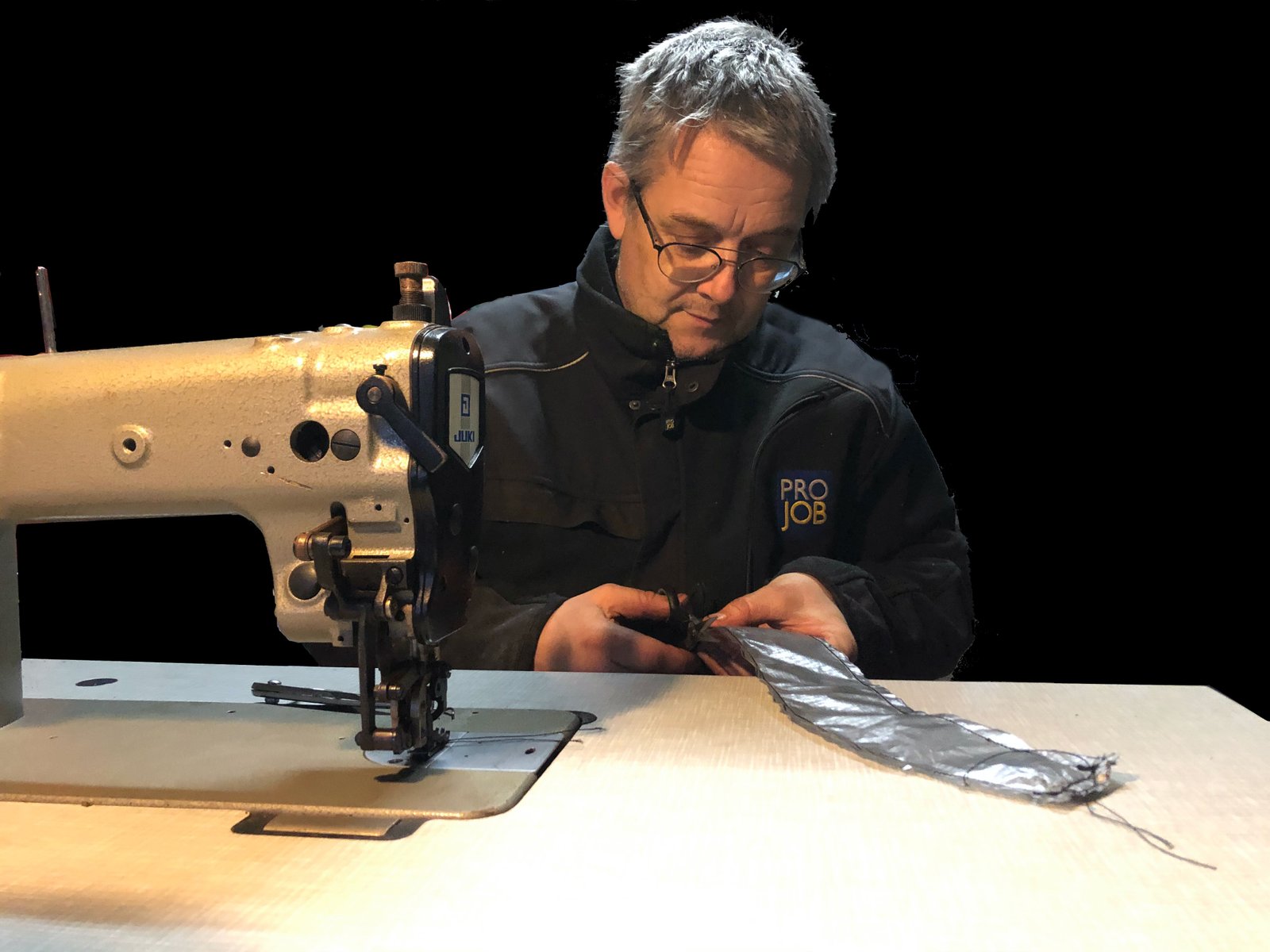
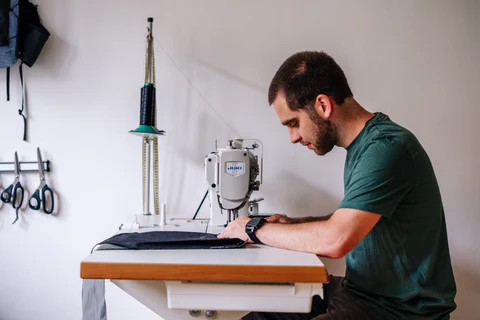
For me, the strongest green flag of all is the micro-factory model. That is when a brand shows exactly who is making the product, often in a small workshop with one or a few skilled people. You see real faces, real machines, real workspaces, and sometimes you can even ask for a custom variation. That level of visibility is hard to fake.
Picture aside is from Philip Raboch, making hyper lite backpacks.
Watch out for red flags
Red flags do not automatically mean a brand is dishonest. They simply mean I look more closely.
One common warning sign is language such as “new arrival coming soon”. That can suggest products are arriving in batches from far away rather than being made within a more local European production rhythm.
Another one is long shipping times, especially when they do not match the brand’s story. If a normal, standard product takes several weeks to ship, I start wondering whether it is being sourced from China or another non-European production hub rather than held or made closer to home. However this is a weak red flag. Ordering from outside of the EU, such a Ukraine will probably take a couple of weeks too,
I also become cautious when a website looks almost identical to many others. Sometimes that points to a generic e-commerce set-up rather than a brand with its own genuine production story. And very often with a too-good-to-be-true story.
Then there is silence. If a brand says a lot about responsibility, sustainability, and values but says almost nothing clear about where its products are made, I see that as a serious warning sign. True transparency usually includes production location.
Heavy discounts and constant urgency can also be a red flag. European production comes with higher labour costs, so deep discounts all the time do not always sit comfortably with a story about fair and careful manufacturing. Some genuine European brands are quite open about keeping pricing stable throughout the year and only discounting small amounts of leftover stock. See the news item on the decision from Not-Perfect Linen.
A final warning sign is a product range that feels too broad to be credible. If one small brand claims to produce knitwear, kitchenware, bags, and technical outdoor gear, I start asking difficult questions. Different product categories often need different machinery, skills, and supply chains. That does not make it impossible, but it does make the story less convincing.
Big brands need extra caution
Many people assume bigger brands are easier to trust because they are better known. In reality, large brands often need more careful research.
I do respect bigger brands like the German VauDe, but their production is hardly in Europe.
There are exceptions. The French outdoor brand Lagoped, or the German footwear brand Birkenstock for example are fully made in Europe.. But in general, once a brand becomes very large, production is often spread across several countries and sometimes several continents.directalpine+1
That is why size alone tells you very little. A famous name does not automatically mean local production. In many cases, a smaller brand with a tighter range is much easier to verify than a global brand with a complex supply chain.
Ask the brand directly
When the information is unclear, I contact the brand.
This sounds obvious, but many people skip it. A polite question can save a lot of guessing. Ask where the product is made, whether that applies to the whole range or only part of it, and whether production happens in one factory or several.
The reply matters. A transparent brand will usually answer clearly and directly. A vague reply — or one that avoids the question altogether — tells you something too.
Trust the facts — and your instinct
Research is mostly factual, but not entirely.
Sometimes the details look technically correct, yet something still feels off. The language may be too polished, the story too generic, or the product range too scattered. That gut feeling should not replace evidence, but it should tell you to slow down and dig deeper.
The opposite is also true. Some brands feel genuine from the start because everything fits together: the story, the range, the workshop, the production details, and the way they communicate. With experience, you learn to notice that.
Accept that some cases are complicated
Not every brand fits neatly into one box.
Some companies manufacture in more than one country, or spread production across different factories and even different continents. In those cases, the question is no longer simply “made in Europe or not?” but “which products, which lines, and which factories?”
That takes more time to research, and sometimes there is no quick answer.
InEurope required a brand to produce at least 90% of it’s range on the European continent. That might sound like a clear line – but it’s not. What if the one single biggest product is made in China en twelve other less important items are made in Europe? Or the other way around. Their most important product is made in Europe, but they sell dozens of cheap side products aside that are made elsewhere?
Final thought
If you are new to this, do not worry if it feels slow at first. That is normal. The more brands you research, the faster you become at spotting clear signs, vague wording, and hidden gaps.
My method is simple: start with the website, use AI only as a clue, look for green flags, take red flags seriously, and ask the brand when needed.
That will not make every case easy — but it will make your judgement much sharper.