Trangia Outdoor Stoves from Sweden
100 years of no-nonsense cooking gear, designed and made in Trångsviken — where every stove is built to last a lifetime.
“Sustainability at Trangia starts with longevity. Our stoves are built to last for decades.”
100% made in Sweden – Manufactured in Trångsviken, Jämtland since 1925 – VISIT TRANGIA →
| Price | Sustainability | Availability |
|---|---|---|
| €€ | ★★★★★ (Top-tier) | Online + worldwide retailers |
(€ = budget | €€ = mid | €€€ = premium | €€€€ = luxe) (★★★★★ = heirloom + zero-waste preorder |
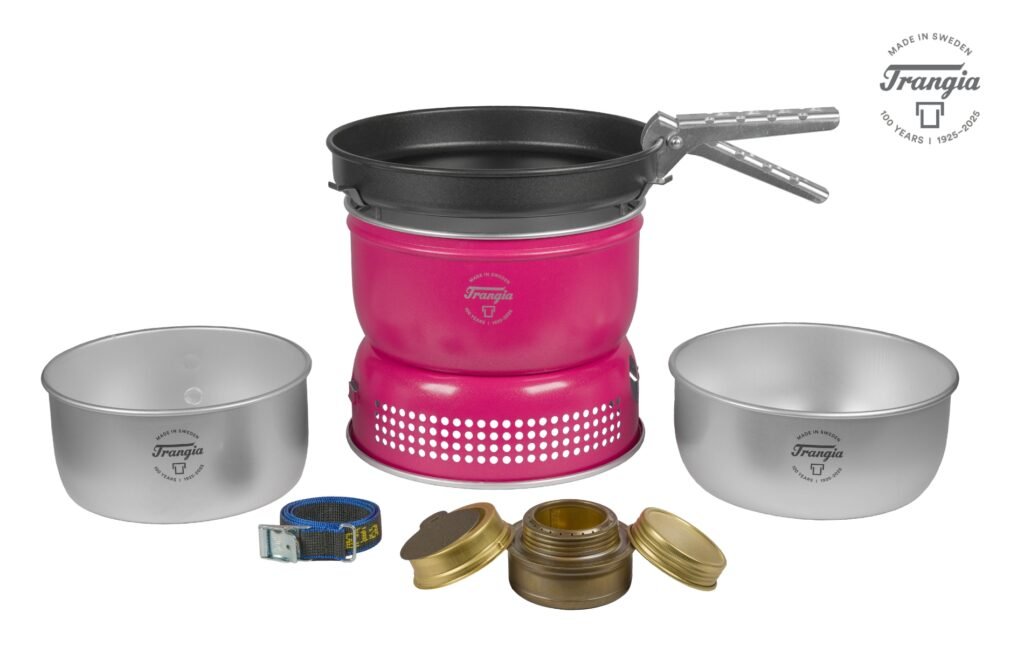
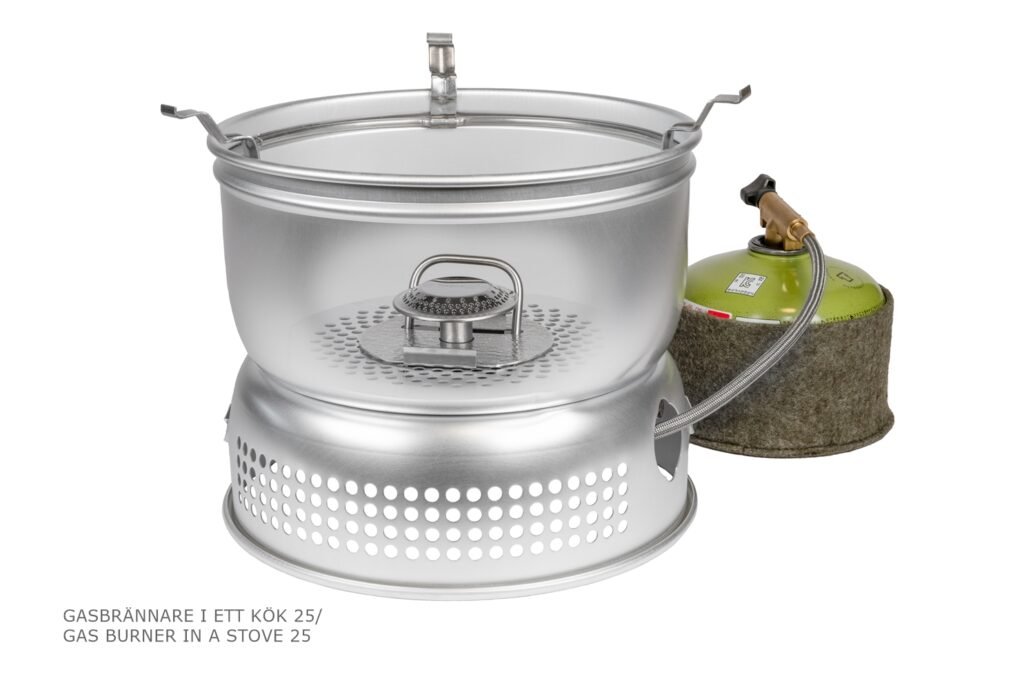
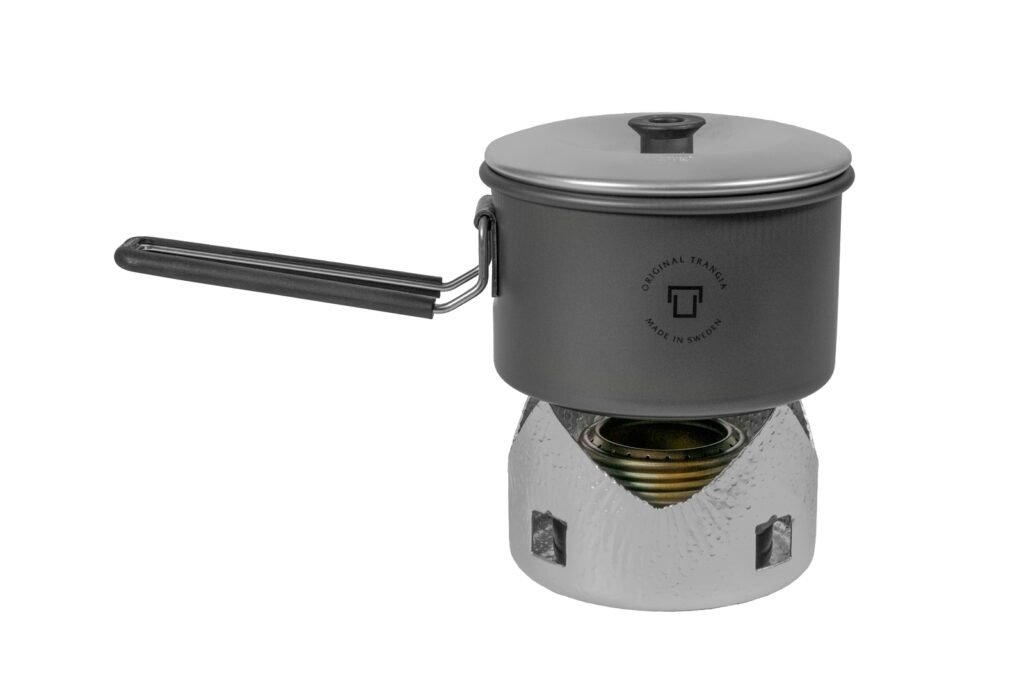
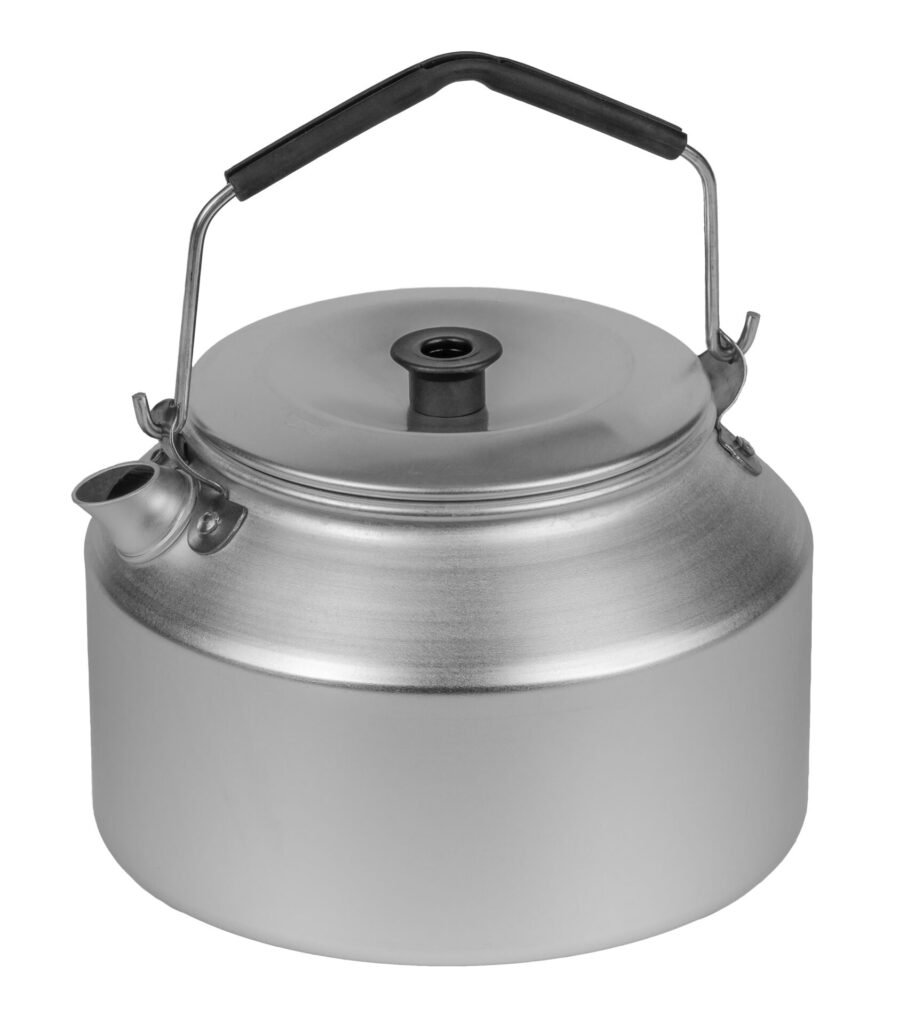
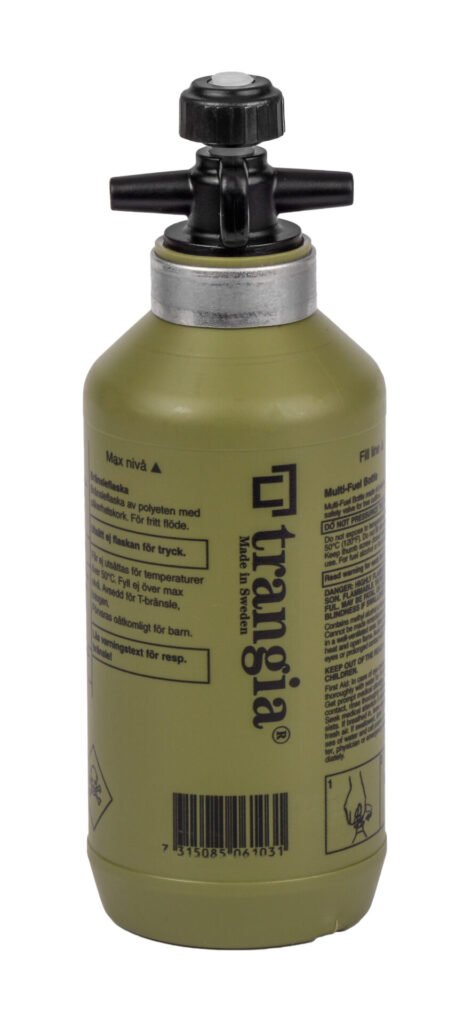
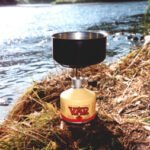
Most camping stoves either leak, explode under pressure, or die in bad weather. Trangia’s spirit burner does none of those things. It has no pressurised gas, no moving parts, and a windshield so effective that the harder the wind blows, the better it performs. Since 1925, this small Swedish company has made one thing exceptionally well: reliable, repairable, lifetime outdoor cooking gear — and a stove system genuinely built for storms.
Brand Intro
Trangia was founded in 1925 by John E. Jonsson and his father-in-law Fritiof Svensson in Trångsviken, a small village in Jämtland, northern Sweden. John was a technically driven entrepreneur; Fritiof, the commercial force — together they launched an aluminium cookware company that would evolve into one of Europe’s most trusted outdoor brands. Today, three generations later, CEO Bengt Jonsson — John’s grandson — still leads the company. All production remains in Trångsviken, giving Trangia full control over quality and the ability to adapt quickly. Their core product, the Trangia stove, has been in continuous production since 1951 and remains largely unchanged — a testament to getting the design right the first time.
Safety & Performance
Why the Spirit Burner Is One of the Safest Camp Stoves Available
Unlike gas canister stoves, the Trangia spirit burner operates completely unpressurised. There is no canister that can rupture, no regulator to fail, and no valve to freeze up in cold weather — where gas stoves notoriously lose pressure and stop working. The burner is made of solid brass with zero moving parts: if something goes wrong, the fuel simply burns off quietly rather than igniting an explosion. Alcohol fuels are also widely available worldwide — from methylated spirit to bio-ethanol — so you are never dependent on a specific canister brand in the field.
Built for the Storm
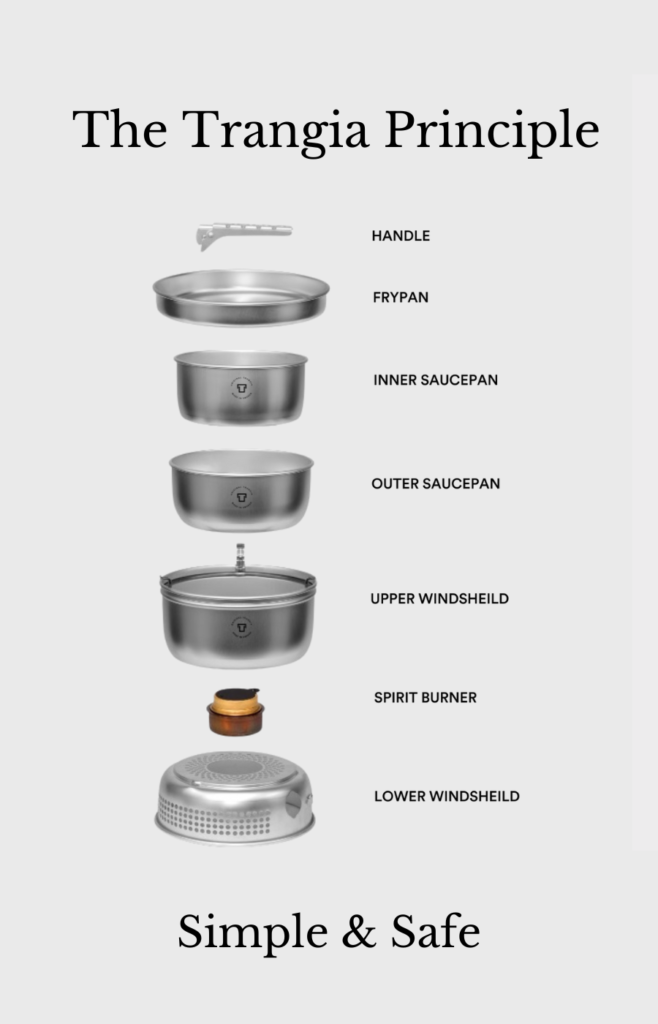
The Trangia Storm Cooker takes its name from the Swedish word stormkök — storm kitchen. The system uses a two-part interlocking windshield with precision airflow openings: it doesn’t just block the wind, it channels it to keep the flame alive and burning efficiently. In testing, the Storm Cooker performs better in wind than in calm air, because the airflow design feeds the burner rather than smothering it. Rain, headwind, mountain gusts — the system was designed for exactly those conditions, not despite them.
Inspiring Story
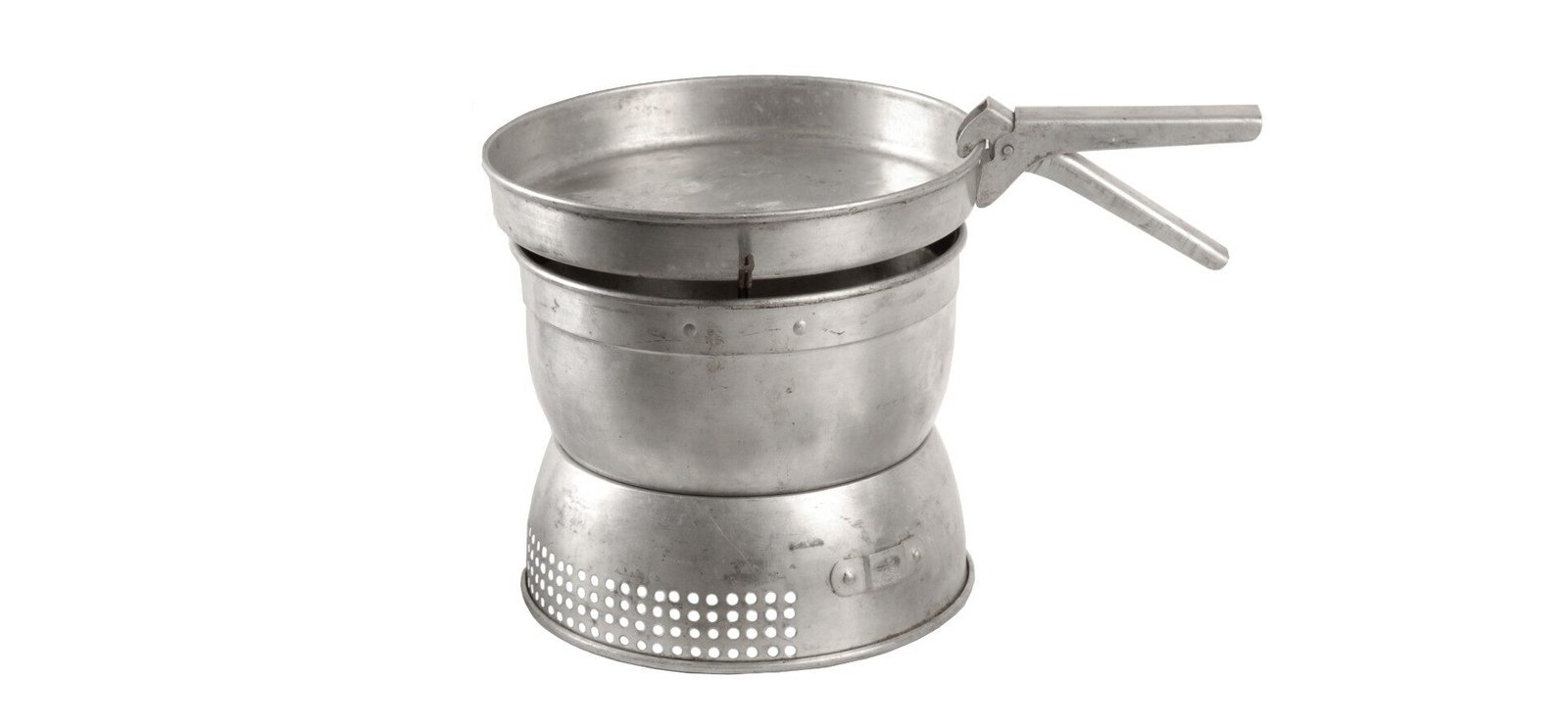
In 2025, Trangia turned 100 years old. That milestone is remarkable not because the company survived a century, but because it did so by refusing to chase trends. The iconic Storm Cooker model 25 — introduced in the early 1950s — looks almost identical today to what it did when it first launched. John E. Jonsson grew up on a farm and was drawn to technology and design from childhood; his ambition was not to build a large corporation, but to build useful, lasting things. That DNA persists: every stove produced today still leaves the same factory in the same Jämtland valley, with a design lifecycle estimated at 20 to 30 years. When a stove finally wears out, it’s almost entirely aluminium — easy to recycle into new products.
Who is this for?
You cook real food in the field — not just boil water. You’ve replaced cheap gear too many times and you’re done with it. You want a stove that fits in your pack, works in a storm, and is still functional when you hand it to your kid in 15 years. You care where your gear is made and want to know it won’t end up in landfill after two seasons. You might already own a Trangia — you just haven’t replaced it yet, because you haven’t needed to.
| Made in Europe | ✅ 100% weden (Trångsviken, Jämtland — 100% manufactured on-site) |
| Ownership | ✅ Family-owned — Bengt Jonsson (3rd generation) |
| Company size | Small–Medium (village-based single-site production) |
| Durability | Designed to last 20–30 years – Fully repairable with spare parts – Iconic design unchanged since 1950s |
DISCLAIMER Sustainability score is subjective. InEurope.eu finds this crucial, but conducts no audits. Assessment based on publicly available information and brand feedback
The information on this blog has been presented to the brand but not yet been verified.
Every week we spotlight a new 100% European maker.
Seen a brand we should feature? Drop us a line at https://ineurope.eu/contact-us — we read every single suggestion.
Have a visit and see a huge collection of eco-friendly clothing brands.